

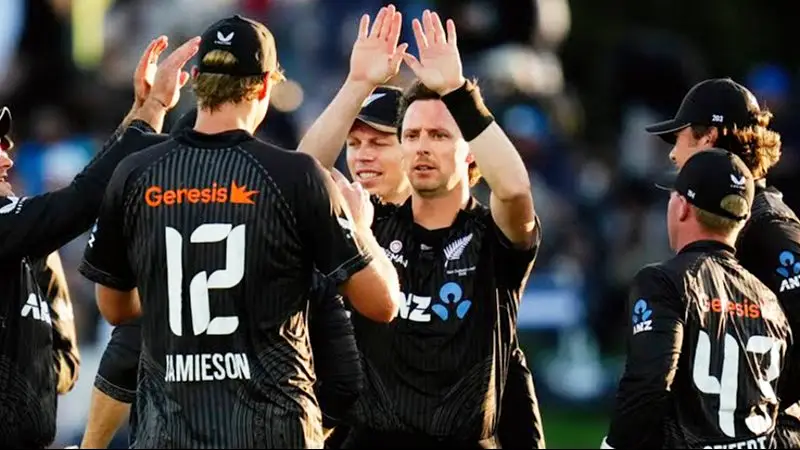

Henry bowled India out for 89 by attacking the stumps with a new ball that moved both ways, finishing with a career-best 6/27 at Bay Oval. Three batters were gone in the first over with nothing on the board, and the chase never recovered. A leg injury had cost him the T20Is, and concussion worries kept him out of the early ODIs, so the fourth match doubled as a fitness test. He passed it and took Player of the Match.
A First Over Without Precedent
Rohit Sharma faced the opening ball of the chase: back of a good length and moving away, so he nicked it to first slip. Kohli, who had already played and missed once, then lost his stumps to a nearly identical delivery that came in and kept low. The over closed with an inswinger that hit Iyer in front, and a successful New Zealand review ended his stay.
India had never opened an ODI innings by losing three wickets before a run came. Jamieson followed by removing Ruturaj Gaikwad with some bounce and sharp movement, which made it 9/4 with 5.3 overs gone. Chasing 334 had turned into a salvage operation by the sixth over, and the match was effectively settled before the first change of bowler.
Matt Henry six wickets India ODI series
Henry conceded 27 runs from 9.4 overs, two of them maidens, for an economy of 2.79 and 45 dot deliveries. Those dot balls matter more than the average suggests, because a chase of 334 needs scoring from every over. Jamieson’s 1/12 came from six overs, and Fisher added 3/31. Henry went 17 balls before conceding a run.
Ishan Kishan went in the 21st, Kuldeep Yadav in the 23rd and Gurnoor Brar in the 27th, all bowled. The table shows how the plan shifted after the new-ball burst: three early dismissals came from movement, the rest from fuller lengths.
Batter | Dismissal | Over | Delivery | Score |
|---|---|---|---|---|
Rohit Sharma | c Allen b Henry | 1st | Back of length, seamed away | 0/1 |
Virat Kohli | b Henry | 1st | Seamed in, stayed low | 0/2 |
Shreyas Iyer | lbw b Henry | 1st | Inswinger | 0/3 |
Ishan Kishan | b Henry | 21st | Full, clean bowled | 61/6 |
Kuldeep Yadav | b Henry | 23rd | Beat inside edge | 69/8 |
Gurnoor Brar | b Henry | 27th | Full, after a short ball | 89/10 |
Length Choices in a Heavy Wind
A hard wind killed the swing, so Henry set out to threaten the stumps. That left length and line as his only variables, and he varied both. In his words, the new ball offered only a small window, and he credited Jamieson’s mobile seam, the kind where a wobbling seam hides the direction from the batter.
He started back of a length, then returned with fuller deliveries. Kishan lost his stumps in the 21st, and Kuldeep’s inside edge was beaten as he was bowled in the 23rd. Brar saw a short ball at the shoulder, then a full one that slipped under the bat and ended the innings in the 27th.
A Spell Measured Against His Career
Henry had not gone past five in an ODI before this. The old mark, 5/30 in 2014 versus Pakistan, fell to 6/27. Against India, he had topped out at 5/42 during the 2025 Champions Trophy match in Dubai, and at this ground his best before was the 2016 return of 5/40 versus Sri Lanka. Few bowlers collect a career best, a ground best and an opposition best in one afternoon.
Among New Zealanders, Shane Bond held the only six-wicket ODI haul against India as of 2019, with 6/19 in 2005. Trent Boult’s 5/21 ranked next on that list.
The Test Squad and the Top Three
Iyer later said the ball seemed both in and out, so batters had no settled plan from the start. Henry now joins the New Zealand Test squad for the matches against India beginning 19 November, which makes this his only ODI of the contest and a quick turnaround from limited-overs cricket to five-day play.
Jamieson is expected to open the bowling with him in the Tests and has shown the same bounce and seam. Whatever follows the Matt Henry six-wicket India ODI series result, the visitors still need a batter who survives the opening over.
Which of the three first-over dismissals, Rohit, Kohli or Iyer, was the hardest to avoid? Tell us in the comments.
Frequently Asked Questions (FAQs)
How many wickets did Henry claim versus India in the fourth ODI?
He took six wickets for 27 runs from 9.4 overs. Three of them fell in the opening over, which he bowled as a maiden, and he added another maiden later in the spell.
What were his bowling figures at Bay Oval?
He gave up 27 runs across 9.4 overs, with two maidens and six wickets. That works out to an economy of 2.79, backed by 45 dot balls, in a match India lost by 244 runs.
How did New Zealand bowl India out for 89?
India stood at 0/3 once the first over ended and never recovered. Henry took six wickets, Fisher three and Jamieson one, and the innings ended in 26.4 overs against a target of 334.
What is his best ODI bowling figure?
It is 6/27, taken on 13 November 2026 at Bay Oval. That beat his previous best, 5/30 versus Pakistan in 2014, which had stood for a dozen years.
Who won Player of the Match in the fourth India v New Zealand ODI?
Henry took the award for his 6/27. He had stayed back for the match to prove his fitness after a leg injury and concussion concerns.