

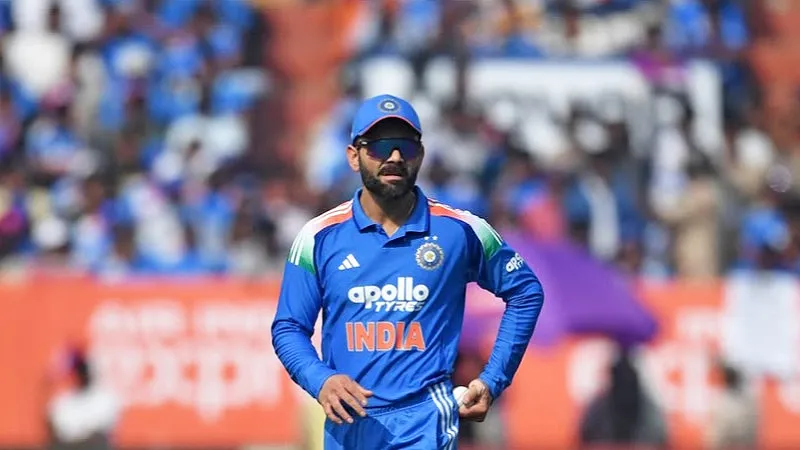

For generations, Indians have been enthralled by their own poetic and cinematic portrayals of a “sporting sorrow”. Cinema has provided us with the endless tragedies of kings, and, for years, music has allowed us to turn our heartbreaks into chart-topping songs, which are, in many ways, a celebration of our despair. For decades, Indian cricket fans too celebrated in this manner – they worshiped individual warriors who fought futile battles, and they were just as thrilled when their team was defeated heroically, as they were when they won. The image of Sachin Tendulkar walking off the field at the MCG in 1999, with seagulls flying overhead, is now an iconic one because it had such a tragic feeling about it.
Virat Kohli, though, refuses to fit that mold. Even when circumstances conspire to a thin batting order, a 338-run chase, wickets tumbling around him, Kohli resists becoming cricket’s sad protagonist. The Indore ODI against New Zealand came closest. This was unfamiliar terrain: Kohli stranded, India defeated, and a masterpiece unfinished. Yet what followed wasn’t tragedy. It was laughter, banter, and calm self-awareness. In a cricketing culture addicted to heroic suffering, Kohli’s refusal to be tragic might be his most radical trait.
A Culture Obsessed With Noble Defeat
Indian cricket mythology has long prized aesthetic resistance over ruthless closure. Tendulkar carried fragile line-ups for years, often batting with the tail, turning defeats into moral victories. Those innings linger because they were lonely. Kohli, by contrast, has grown up in stronger teams, and strength dilutes tragedy. When victory is expected, heartbreak doesn’t linger the same way.
Why Kohli’s Chasing Numbers Tell a Story
Kohli’s chasing record borders on absurd: before Indore, only four of his 28 ODI hundreds while chasing came in defeats. That’s not a coincidence, it’s control. His ability to score at run-a-ball without recklessness allows matches to stay alive without desperation. He doesn’t need miracle mode because he rarely lets games drift there. Tragedy, in cricket, often requires hopelessness. Kohli eliminates that too efficiently.
Indore: A Glimpse of the Unfamiliar
Indore felt different. Nitish Kumar Reddy and Ravindra Jadeja at Nos. 6 and 7 exposed a batting depth India hasn’t dealt with in years. Wickets fell early, New Zealand isolated Kohli expertly, and he faced just 75 of the first 180 balls he was present for. For once, Kohli had to suppress instinct and shepherd. This wasn’t domination, it was survival.
The Most Complete Kohli We’ve Seen
Paradoxically, this may have been Kohli’s most complete ODI innings. Risk-free accumulation met modern power-hitting: a six within his first seven balls, another early boundary attempt controlled to perfection. Only eight false shots in 108 balls tells its own story. He nurtured Reddy and Harshit Rana to maiden fifties, cheered them loudly, and forgave mistakes, a far cry from the edge of his younger self. This wasn’t a man fighting fate; it was a master adapting to it.
The Moment Tragedy Knocked And Was Denied
When Rana and Siraj fell back-to-back, the script begged for a tragic ending. Kohli began strike-farming, calculating boundaries, flirting with immortality. Then came the first truly mistimed boundary attempt caught at long-off. Deepest he’s ever gone in a chase without winning. Cue the sad montage? Not quite. No slow walk. No bowed head. Just a smile, jokes with teammates, and a glance at his phone. Tragedy requires surrender. Kohli never offers it.
Key Takeaway
Virat Kohli doesn’t lose beautifully; he competes relentlessly, even in defeat.
FAQs
- Why is Virat Kohli not seen as a tragic hero?
His personality, teams, and control-driven batting rarely allow hopelessness to define his innings.
- What made the Indore ODI unique in Kohli’s career?
It was the deepest he went in a chase without winning, under conditions of rare batting vulnerability.
- How does Kohli differ from Tendulkar in losing causes?
Tendulkar often fought alone; Kohli usually controls chases within stronger team structures.
Disclaimer: This blog post reflects the author’s personal insights and analysis. Readers are encouraged to consider the perspectives shared and draw their own conclusions.
Step into the world of cricket with JeetBuzz News—where expert opinions, trending Blogs, and behind-the-scenes insights meet all your favorite topics. Stay informed, stay entertained, and never miss the stories shaping the cricketing world—only on JeetBuzz News!