

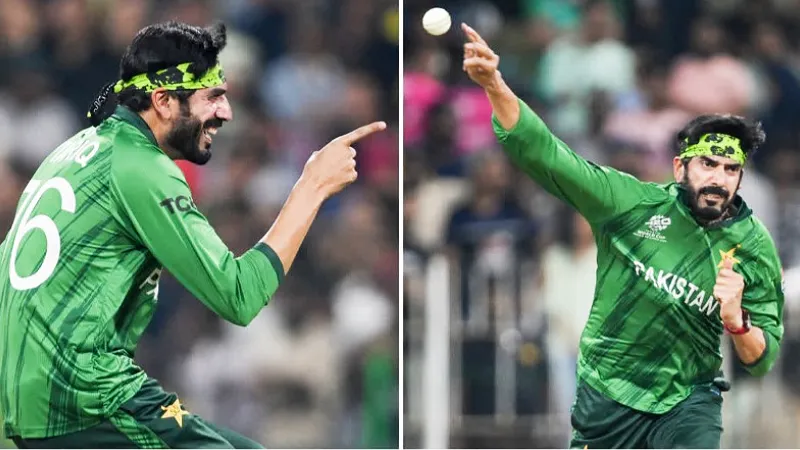

Usman Tariq’s bowling action has been officially confirmed because he passed multiple ICC biomechanical assessments, proving his elbow extension remains within the legal 15-degree limit. Questions like Is Tariq chucking emerged due to his unusual pause and arm position, but the ICC biomechanics test bowling action explained that visual perception alone cannot determine illegality. Detailed motion analysis, including the elbow extension angle, showed his variations comply fully with ICC regulations, clearing him to bowl in international cricket without restrictions.
ICC Testing Procedure Explained Clearly
According to ICC rules, it is illegal for any bowler to have more than 15 degrees of elbow extension. To ensure authenticity, bowlers must bowl with the same intensity as they do in matches when testing their arms. In order to ensure that their skill set can be legally used in all types of bowling (bowling to legal limits), all variations that the bowler would normally use in live games must be tested in a laboratory. An independent expert will also confirm whether the bowler is able to deliver the ball naturally and is not artificially altering their action for testing purposes.
Usman Tariq’s action cleared ICC through this exact process, meaning his deliveries were scientifically verified rather than judged by visual opinion. This system ensures fairness, especially for bowlers with naturally unconventional actions.
Why Usman Tariq’s Action Looks Suspicious
The main reason behind the controversy is perception, not illegality. In this Pakistan spinner action analysis, two visual elements stand out: his noticeable pause before release and his naturally bent elbow structure.
From a tactical standpoint, this pause can disrupt batter rhythm, especially in T20 cricket where timing is critical. Batters often rely on smooth visual cues to prepare their shots, and any interruption can create hesitation.
However, ICC rules focus specifically on elbow straightening during delivery, not how smooth or traditional the action appears. His action may look unusual in slow motion, but biomechanical data confirms it remains legal throughout the release phase. Conditions like slow pitches in Asia can actually make such actions more effective, as batters depend heavily on timing and visual consistency.
Tactical Impact and Match Effectiveness
Beyond legality, his bowling action offers tactical value. Unorthodox spinners often gain advantages through disguise and deception.
His unusual release timing helps conceal variations better, making it harder for batters to predict spin direction or pace. This release delay can also create hesitation in batters’ footwork and shot selection. As a result, such actions are particularly effective during T20 middle overs, on low-bounce surfaces, and in pressure situations where batters must make quick decisions.
While official performance numbers are not necessary to prove legality, cricket history shows that bowlers with unconventional actions often create more uncertainty, which increases wicket-taking opportunities. This makes his action not just legal, but tactically useful in modern T20 cricket.
Elbow Extension Angle Scientific Reality
A key part of the debate centers on the Usman Tariq elbow extension angle, which was measured precisely in ICC testing.
Scientific research shows that human eyes cannot reliably detect illegal elbow extension below the 15-degree threshold, which is why visual suspicion alone is not enough to prove chucking. Many legal bowlers naturally show some elbow flex due to joint structure, and this does not violate rules unless the extension exceeds the allowed limit. Only motion capture technology and biomechanical analysis can determine legality accurately.
This explains why some bowling actions may appear suspicious but remain fully legal under ICC standards. His clearance confirms compliance under cricket’s most advanced biomechanical regulations.
Looking ahead, scrutiny may continue due to visual perception and high-pressure matches, but unless his actions change significantly, his legality is unlikely to be challenged successfully. The key takeaway is clear: modern cricket relies on scientific evidence rather than visual judgment, and ICC testing has already validated his bowling action completely.
Key Takeaway
ICC biomechanical testing confirms his unusual bowling action is legal, making perception, not science, the real source of controversy.
FAQs
Is Usman Tariq chucking or bowling legally?
No, ICC biomechanical testing confirmed his elbow extension is within the legal 15-degree limit.
How does the ICC biomechanics test explain the work of the bowling action?
Sensors and high-speed cameras measure elbow movement during match-intensity bowling to ensure legality.
Why does Tariq’s bowling action look unusual?
His natural elbow structure and delivery pause create an uncommon visual appearance.
Can ICC ban a bowler after clearing him?
Yes, but only if future testing shows illegal elbow extension beyond the allowed limit.
Which bowlers faced similar bowling action controversy?
Several spinners, including Muralitharan, faced scrutiny despite being cleared through scientific testing.