

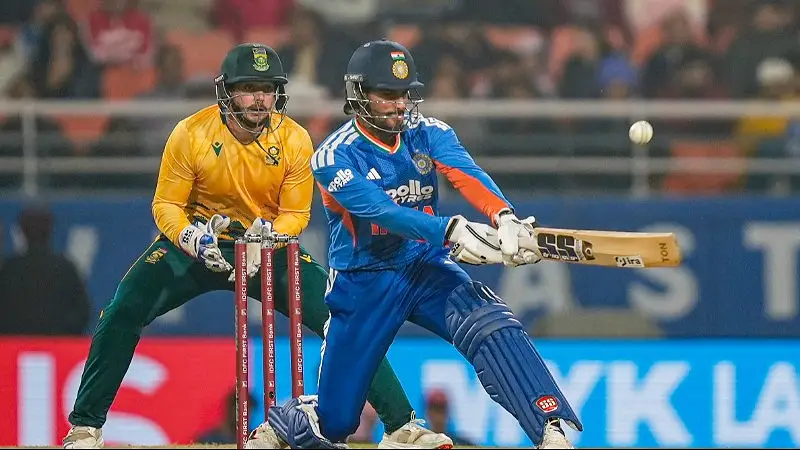

Tilak Varma’s batting position in the team has quickly become a decisive tactical shift for the Indian Cricket Team in the T20 World Cup 2026. Moving Tilak Varma from number three to the lower middle order immediately improved balance, neutralised spin match-ups, and unlocked finishing power. The change directly addresses India’s early-tournament struggles and strengthens their death-over acceleration. This is not just a reactionary tweak; it is a role optimisation aligned with conditions, match-ups, and modern T20 structure.
IPL Finisher Experience Matters
His batting position mirrors a role he has successfully executed in franchise cricket. Batting at number five for the Mumbai Indians in recent IPL seasons, he accumulated 689 runs from 25 innings at an average above 40 and a strike rate close to 138, including three half-centuries.
That familiarity with finishing situations showed against Zimbabwe, where he smashed 44 off 16 balls at a strike rate of 275. The Chennai surface offered true bounce but rewarded power hitters who targeted shorter square boundaries late in the innings. By sending him in at number five or six, India ensured he faced pace-on deliveries in the death overs rather than navigating spin-heavy middle phases where he previously struggled at number three.
Tilak Varma’s Batting Position Fixing India’s Left-Hand Top Order
One major issue for the Indian Cricket Team early in the tournament was predictability. With multiple left-handers stacked at the top, opposition captains opened with off-spin to exploit match-ups. This slowed starts and increased dot-ball pressure during the powerplay.
Tilak Varma’s batting position corrected that imbalance. Promoting a right-hander in the top three disrupted bowling plans and delayed spin introduction. In Chennai, India raced to 48 runs inside four overs, a tempo shift compared to previous matches. Conditions in India often reward proactive powerplay intent, especially when the ball skids under lights.
Unlocking Hardik’s Aggression
The third impact of his batting position lies in freeing up Hardik Pandya’s attacking role. When one batter alone carries finishing responsibility, risk-taking becomes cautious. With Tilak absorbing pressure and maintaining high strike rates, Hardik could attack from ball one.
Their 84-run partnership off 31 balls demonstrated how dual finishers stretch bowling units. On flat Chennai pitches where dew can reduce grip, having two boundary-hitters in the final five overs maximises scoring potential. It also preserves depth, as India still had an additional power-hitter unused in that match.
Tilak’s shift fits that blueprint. Rather than forcing a young batter into a classical top-order anchor role, India has repositioned him as a match-up disruptor and tempo accelerator. If India continues this structure, they gain flexibility against stronger bowling attacks in the knockout stages. The success in Chennai suggests sustainability, not coincidence. In high-pressure tournaments, balance wins titles, and this positional shift may quietly become one of India’s most influential tactical decisions of the campaign.
Key Takeaway
Varma’s batting position in the T20 World Cup 2026 strengthens India’s balance by combining match-up intelligence with proven finishing power.
FAQs
What is Tilak Varma’s current batting position in the T20 World Cup 2026?
He has been moved from number three to the lower middle order, typically around number five or six, depending on the match situation.
Why did India change Tilak Varma’s batting role?
To fix left-hand match-up issues at the top and maximise his effectiveness as a finisher.
How does this impact the Indian Cricket Team’s powerplay strategy?
It allows a right-hand option in the top order, preventing early off-spin dominance and improving scoring tempo.
Can Tilak Varma remain a finisher in knockout matches?
If conditions favour aggressive death-over batting, India are likely to continue using him in that role.