

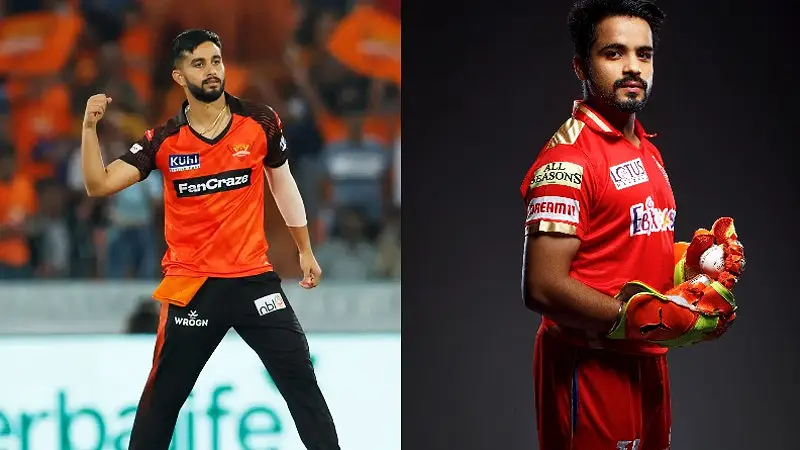

The IPL makes a reputation. The Ranji Trophy tests them. In the 2025–26 season, five players who had built genuine white-ball profiles walked into red-ball cricket and found that franchise form doesn’t travel. Jammu and Kashmir claimed the title. Karnataka stayed competitive. And five well-known names left the domestic season with questions attached to their names that T20 cricket won’t answer.
Here’s what went wrong, specifically, not generally.
How Prabhsimran Singh’s Aggressive Game Unravelled Against Seam
Prabhsimran Singh averaged 18.4 across his ten innings. For context, that’s the kind of return that gets a red-ball career quietly shelved. The problem wasn’t effort; it was instinct. Prabhsimran’s IPL game is built on accessing the leg side early and driving hard through the off. Against new-ball bowlers in the first session on seaming tracks, those same instincts became liabilities. He was dismissed driving on the up four times in his first seven innings, each time on a length that a red-ball batter learns to leave by his second domestic season.
Why Mayank Markande’s Variation Wasn’t Enough Over Long Spells
Mayank Markande’s T20 value is clear: he varies pace, hides the googly well, and is hard to read in a four-over spell. Across 11 innings this season, he averaged 52.3 with the ball and took 9 wickets at a strike rate of 74. Those are not the numbers of a red-ball spinner who threatens batting lineups.
The issue is structural. In T20 cricket, a bowler who concedes 28 in four overs but takes two wickets is valuable. In first-class cricket, the same bowler needs to take wickets in clusters across 20-over spells on surfaces that offer nothing. Markande’s drift and dip, his best weapons, require responsive pitches.
Vijaykumar Vyshak’s Economy Hid a Wicket-Taking Problem
Vyshak’s economy rate of 2.9 percent looked respectable on paper. His 11 wickets in 7 matches looked workable. But Karnataka needed penetration in knockout cricket, and Vyshak’s inability to generate reverse swing with the older ball, a non-negotiable skill for seamers in red-ball cricket beyond 60 overs, left him effective only in short bursts.
His IPL profile is pace and hard lengths. In the IPL, that’s enough. In Ranji cricket, where batters have 30 overs to read your lengths and adjust, a one-dimensional seamer becomes predictable by the second new ball. Vyshak’s economy told you he was disciplined. His strike rate of 62.7 told you he wasn’t dangerous enough.
How Mukesh Kumar’s Ranji Trophy 2025 Season Fell Apart After One Spell
Mukesh Kumar’s five-wicket haul against Odisha was the headline. The other nine innings were the real story, 14 wickets at an average of 41.2, with no spell of three or more wickets outside that single performance.
Against Jammu and Kashmir in the knockout phase, he went wicketless across 22 overs in the first innings, allowing their top order to settle and build the platform that ultimately won them the title. Senior seamers in Ranji cricket are judged on their ability to break partnerships repeatedly across a match, not produce one memorable morning session. Mukesh produced one. That’s an IPL bowler’s output in a red-ball format.
Naman Dhir’s Patience Problem Exposed at the Crease
Naman Dhir’s red-ball average of 21.6 across eight innings reflected a batter still learning what patience actually means at the first-class level. Six of his eight dismissals came before he had faced 30 balls, a pattern that suggests the trigger movements that work in T20 cricket were being applied in conditions where they invite nicks and lbws.
His IPL record shows a clean striker who can hit over the top from ball one. That’s his value in franchise cricket. In Ranji conditions, particularly against disciplined medium pacers targeting fourth-stump lines, that same cleanliness of strike becomes a technical vulnerability. Dhir is young enough to fix it. But this season confirmed the fix hasn’t started yet.
FAQs
Why do IPL players struggle in Ranji cricket?
Because red-ball cricket demands patience, technique, and long-spell effectiveness that T20 formats often do not test.
How important is it for national selection?
It remains a critical benchmark for assessing red-ball readiness, especially for Test and India A consideration.
Which domestic teams dominated the Ranji Trophy 2025?
Jammu and Kashmir Cricket emerged as champions, while Karnataka Cricket remained consistently competitive.