

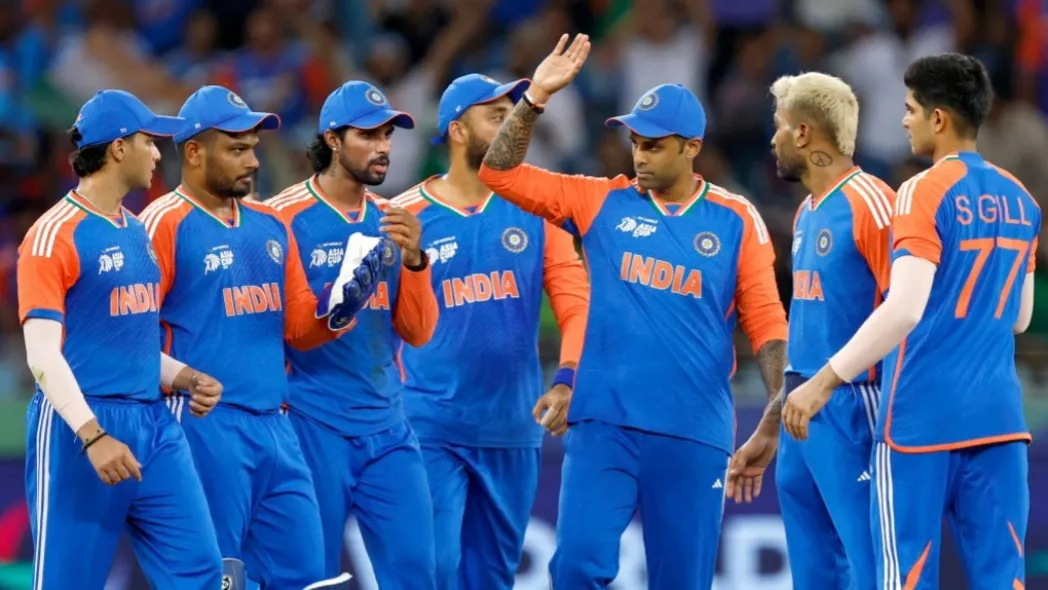

You can say that there is an adage in Cricket which states that when you are winning, you should not make any changes to your successful team. Apparently, the Indian selectors threw this handbook into the fire. With the 2026 T20 World Cup scheduled for kickoff on February 7th, in both India and Sri Lanka, the excitement is at an all-time high; however, I would guess that the temperature in the Indian team’s locker room may be a little cool right now. It’s not just that Team India announced their 15-member roster for the tournament; it is also who did not make the cut. Shubman Gill was one of those players who has been widely regarded as the next best thing to bat for India and has been sent home. This is not some type of rest or break from play; it is a message.
Sacrificing Star Power for Strike Rate Efficiency
A decision as much as a choice, like leaving out Vice Captain Shubman Gill, can lead to pub fights among the fans; however, it’s a tactical decision that may be the most logical India has made since his return to international cricket at the Asia Cup. His batting performance has declined since he returned from injury, but the biggest problem he has had with short-form cricket is tempo; by taking out the top-class accumulator Shubman Gill, and keeping Suryakumar Yadav (captain) and Axar Patel (vice-captain), the selectors have clearly sent the message they want players who can make an impact, rather than technically proficient players. In a World Cup that is being held at home, and on pitches that are expected to spin and seep, there is no place for a player who takes ten deliveries to score runs.
Balancing Role Clarity Against Unlucky Omissions
If Gill’s exit was tactical, Jitesh Sharma’s exclusion feels statistically cruel. Having done “very little wrong” in his seven outings, Jitesh has been sidelined for Ishan Kishan, who enters as the reserve wicketkeeper behind Sanju Samson. This reveals a preference for top-order flexibility (Kishan) over a designated lower-order finisher. It’s a gamble. India is betting that their top order will do enough damage that a specialist finisher at number 7 isn’t as vital as a backup opener who can nuke a spin attack in the powerplay. It’s a harsh call on Jitesh, but it underscores a squad built on aggressive redundancy rather than distinct specialization.
Leveraging Subcontinental Dust Bowls for Success
Balaji’s identification of the “Final Four” – India, Sri Lanka, Australia, and South Africa – isn’t merely a collection of major teams; rather, it’s an interpretation of the conditions. His selection of Sri Lanka is somewhat unusual due to the team’s recent instability; however, he is correct regarding the co-host advantage. On slow turning pitches in Colombo or Chennai, the difference in ability for a powerful team such as England compared with a team with many spinners (Sri Lanka) will shrink considerably. Additionally, Balaji includes Afghanistan as a fringe competitor, which is a reference to the fact that on a very rank turner, Rashid Khan and company are no longer underdogs and instead become potential threats.
If India does indeed become the first team in history to win three T20 World Cups, the Indian selectors would be credited with genius in their selection decisions. However, if India fails to do so, the fact that the “Prince” was left out of the squad will likely be the first criticism made against them. The fact that India is clearly indicating their intention to dominate this tournament is clear; however, they plan on throwing the whole party and destroying all the furniture.
Key Takeaway
India’s squad selection proves that in the modern T20 landscape, reputation is secondary to role clarity, even if it means dropping the future captain.
FAQs
1. What was the biggest surprise in the Indian squad announcement?
The exclusion of Vice-Captain Shubman Gill due to poor form and the dropping of Jitesh Sharma despite his solid performances were the major shocks.
2. Why does L. Balaji believes Sri Lanka will reach the semi-finals.
Balaji backs Sri Lanka largely due to the co-host advantage, as familiarity with subcontinental pitches often levels the playing field against stronger teams.
3. How does India’s T20 World Cup record compare to Australia’s?
India has won the title twice (2007, 2024), while Australia has won it once (2021); interestingly, they have never met in a T20 World Cup final.
Disclaimer: This blog post reflects the author’s personal insights and analysis. Readers are encouraged to consider the perspectives shared and draw their own conclusions.
Step into the world of cricket with JeetBuzz News—where expert opinions, trending Blogs, and behind-the-scenes insights meet all your favorite topics. Stay informed, stay entertained, and never miss the stories shaping the cricketing world—only on JeetBuzz News!