

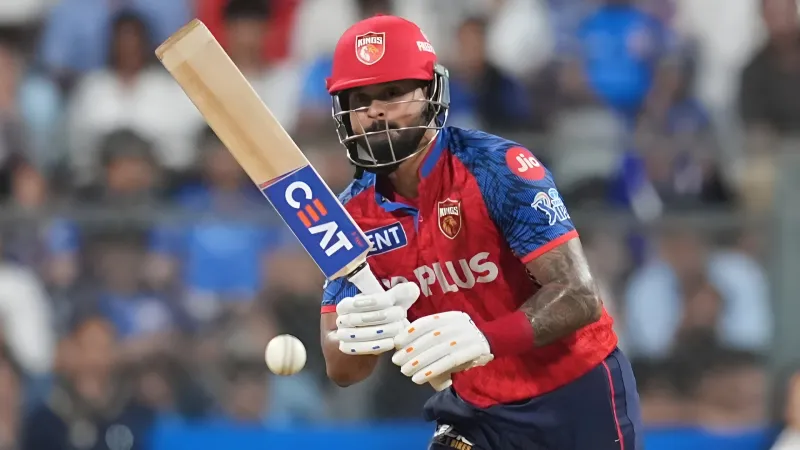

There was a specific reason Iyer found himself on the outside of India’s T20I setup, and it wasn’t a general loss of form. It was the short ball. Bowlers at the international level identified it, targeted it consistently, and the results showed. Selectors noticed. What’s changed recently is that Iyer has gone back and done the work on exactly that problem, and the improvement isn’t subtle. He’s now taking on pace and bounce with a control that wasn’t there before. In a squad as deep as India’s, fixing one specific vulnerability is sometimes all it takes to move from the conversation to the selection table.
The Short Ball Problem Is Gone
The earlier version of Iyer against short-pitched bowling looked uncomfortable in a way that international bowlers at pace could exploit repeatedly. The instinctive pull was there, but the control under pressure wasn’t consistent enough. At the highest level, a weakness that can be targeted reliably becomes a template. Once that template circulates, it gets used every time.
What’s visible now is a batter who has worked on the back-foot options rather than just his natural front-foot game. He’s not just surviving the short ball; he’s scoring off it with genuine intent. That distinction matters because surviving a weakness means selectors still have a concern. Scoring off it means the template no longer works.
Shreyas Iyer and the Role Debate
The more complicated question around Iyer isn’t whether his batting has improved. It’s whether India’s current T20I structure has a slot that fits what he offers. Suryakumar Yadav owns the most demanding middle-order position in the side. Rinku Singh has carved out a specific role as the finisher who comes in late and hits. Hardik Pandya adds the all-round dimension that gives the middle order flexibility it wouldn’t otherwise have.
Iyer slots in most naturally between overs 7 and 15, where his ability to rebuild without killing the scoring rate and accelerate once he’s set is most valuable. The debate isn’t whether he’s good enough for that role. It’s whether India needs that role filled at all, or whether they’d rather have another batter with a higher boundary ceiling in those overs.
Where His Numbers Actually Fit
The area where his profile creates a genuine trade-off is the death overs. Compared to India’s most aggressive batting options, his boundary percentage in the final four overs is lower. That’s not a criticism of his batting. It’s a recognition that he’s a different kind of batter from what India tends to use at that phase. If the innings context requires him to bat 16 to 20, he’s not the optimal choice. If he’s batting 8 to 16 and handing over to a designated finisher, he could be exactly what’s needed.
Why Australia Changes Everything
The next T20 World Cup in Australia reframes the entire selection conversation. Australian pitches at venues like Perth and Melbourne offer extra bounce and carry that subcontinent batters who haven’t adjusted their games tend to struggle with. The short ball, which Iyer has now specifically addressed, is used even more aggressively in Australian conditions than anywhere else.
His improvement against pace and bounce isn’t just about the domestic season he’s having. It’s directly relevant to the conditions India will face when the tournament that matters most arrives. A batter who can handle the specific challenge Australia presents without losing his scoring options is worth considerably more in that context than someone who scores freely at home but gets exposed overseas. Iyer’s case for inclusion was always about form and role fit. Now it has a third dimension, and that dimension might be the most convincing one of all.
- Should Shreyas Iyer be in India’s T20I squad for the Australia World Cup, or is the middle order already settled? Drop your take in the comments and follow for Indian cricket updates.
FAQs
What are Iyer’s chances of a T20I comeback?
His chances are strong, but depend on team balance rather than individual form alone.
Why is Iyer not a regular in India’s T20 team?
Competition and role mismatch in the middle order have limited his opportunities.
Should Shreyas Iyer play the T20 World Cup in Australia?
He is a viable option due to improved performance against bounce and pace.
Which role does Iyer fit in the India T20 side?
He fits best as a middle-order stabilizer who can accelerate when needed.
Can India adjust their middle order to include Iyer?
It is possible, but would require reshuffling established roles and combinations.
Disclaimer: This blog post reflects the author’s personal insights and analysis. Readers are encouraged to consider the perspectives shared and draw their own conclusions.