

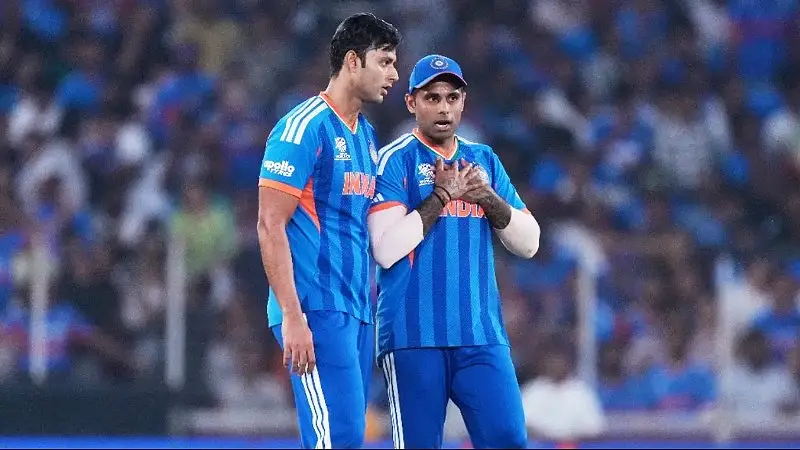

India beat Zimbabwe comfortably. The margin flattered nobody; it was a clinical performance built on batting depth and disciplined bowling from the frontline five. But one number from that match is sitting awkwardly in India’s tournament picture: Dube’s two overs cost 31 runs at an economy of 15.5. Against Zimbabwe. On a surface that gave pace bowlers nothing.
That figure matters more than the result does.
The Sixth-Bowling Role India Built Around Dube
India’s T20 World Cup 2026 squad selection was built on a specific logic: carry Shivam Dube as a batting all-rounder who absorbs two overs, freeing the specialist five to be managed across the remaining 18. It’s a model that works when the sixth bowler is reliable enough not to bleed runs. Hardik Pandya has made it work across three World Cups; his career T20I economy of 8.77 across high-pressure knockout matches shows what controlled seam bowling from an all-rounder looks like under scrutiny.
Dube’s T20I economy across his last eight matches sits at 11.4. The gap between those two numbers is not a small margin; it’s the difference between a bowling unit that controls phases and one that concedes momentum at the worst possible time.
Why Shivam Dube’s Numbers Get Worse on Flat Pitches
The surface at the India-Zimbabwe venue offered no lateral movement and minimal bounce variation. For a bowler whose best deliveries rely on hard-length hit-the-deck impact, those conditions are unforgiving. Dube’s boundary leakage, four boundaries conceded in two overs against Zimbabwe, came from lengths that sat in the hitting zone rather than testing the batter’s technique.
This isn’t an isolated problem. In IPL 2026, Dube conceded 42 runs in four overs against the Mumbai Indians on a similar Wankhede surface, with three of his four overs going above 10 runs. The pattern is consistent: batting-friendly conditions with short boundaries expose exactly the margin-of-error problem that India’s tournament structure cannot absorb at the knockout stage.
How Rohit’s Captaincy Decisions Reveal the Real Concern
Watch how Rohit Sharma used Dube against Zimbabwe. Both overs were bowled in the middle phase, overs nine and eleven, rather than the death, where the risk of a 15-run over becomes existential. That’s a captain managing around a problem, not trusting a player to solve one.
Rohit’s instinct to protect Dube from the final four overs tells you everything about where confidence currently sits. In a knockout match against a top-order lineup like Australia or England, that middle-phase protection disappears. Dube will have to bowl somewhere difficult. The question India’s selectors are quietly asking is whether his batting value, genuine, match-winning, proven, justifies carrying that bowling liability into the last eight.
What India Must Decide Before the Semi-Finals
The selectors have two options and a limited time. Back Dube to find rhythm and reduce his middle-over economy through the remaining group games, or adjust the combination to bring in a player who contributes more reliably with the ball, at the cost of batting depth.
Neither option is clean. Replacing Dube means India loses a batter capable of 30-ball fifties in the middle order, something their batting card doesn’t have a direct replacement for. Keeping him means accepting two high-risk overs in every knockout match, against opposition far more dangerous than Zimbabwe.
India’s tournament is not in crisis. But this specific problem, a sixth bowler bleeding runs when conditions don’t help, is exactly the kind of structural leak that gets exposed under semi-final pressure.
FAQ
Why is Shivam Dube important to India’s T20 World Cup 2026 plans?
He provides batting depth while acting as a sixth bowling option, which helps team balance.
How does Hardik Pandya’s World Cup career compare in this role?
Hardik has shown better control and adaptability across phases, reducing risk during key overs.
Can India play without Shivam Dube in the T20 World Cup 2026 India Squad?
Yes, but doing so would likely weaken batting depth unless replaced by another bowling all-rounder.
How does Shivam Dube’s IPL career influence his selection?
Strong IPL performances reinforce his batting value, which selectors hope translates to international impact.
What conditions make Dube’s bowling more challenging?
Flat pitches and short boundaries reduce margin for error, increasing run flow when lengths miss slightly.