

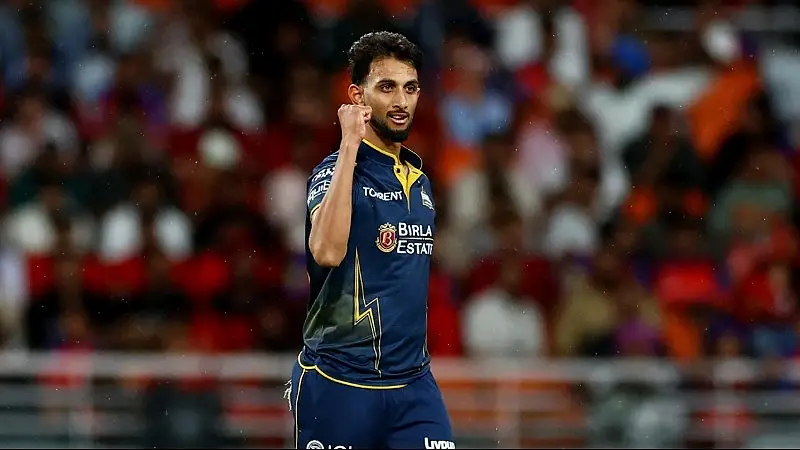

Gujarat Titans defended 160. Not 130. Not 145. One hundred and sixty, a total that requires one or two wickets in the powerplay to create the pressure that makes a modest total feel like a mountain. Prasidh Krishna took wickets when he finally bowled. The problem is when he bowls. Introduced too late. Used in the phase where wickets produce damage control rather than match control. By the time he came on, the opposition had their platform and their momentum. The match that should have been GT’s to win had already been handed away through a bowling plan that valued structure over situations.
Defending 160 Demands Wickets, Not Containment
A total of 160 in T20 cricket isn’t defended through economy rate management. It’s defended through early wickets that compress the batting lineup before it settles into a partnership rhythm that makes 161 feel routine rather than difficult. The first six overs of a chase with no wickets produces confidence in the batting lineup that twelve runs per over in overs fifteen to twenty can then justify. The same chase with two wickets in the first six overs produces a different psychological environment entirely, requiring rate anxiety, batting lineup disruption, and pressure that even good batters struggle to play through cleanly. GT chose economy over aggression. Against a batting lineup that wasn’t under pressure from early wickets, 160 was never enough.
Bowling Overload Weakened GT’s Batting Depth
The too-many-bowlers problem in GT’s playing XI contributed directly to the below-par total that created this defensive situation. When six or seven bowling options exist in one eleven-player team, batting depth is the cost. GT’s 160 was partly a consequence of a batting lineup that didn’t have enough substance below the top order, because those positions were occupied by the additional bowling options, who produced the overloaded bowling unit that then didn’t even get used efficiently. You can’t simultaneously overload the bowling and have deep batting. GT tried and produced the worst of both, a total that needed perfect bowling execution and a bowling plan that didn’t deliver it.
Late Wickets IPL 2026 Cost GT
The IPL 2026 evidence is clear on this specific point. Wickets in overs one to eight have measurably higher match-impact value than wickets in overs sixteen to twenty when batting sides are finishing innings rather than building them. GT took wickets after the opposition had built their platform, which is damage control, not match control. The runs scored before the wickets fell already made 160 chaseable. The wickets arriving in overs thirteen and fourteen reduced the losing margin rather than preventing the loss. Prasidh Krishna’s effectiveness when he finally bowled, multiple wickets in a short spell, confirms exactly why introducing him earlier would have changed the outcome. He was the right weapon deployed at the wrong moment.
What GT Must Change Going Forward
The fix is tactical rather than personnel-based. GT doesn’t need to replace Prasidh Krishna; they need to use him differently when defending sub-170 totals. Front-loading him in overs one to six against the top-order batters who haven’t settled produces the match-changing wickets that modest totals require. Holding him for death overs in those scenarios produces the scoreboard-preserving wickets that don’t change outcomes already determined by the middle overs. Alongside this, GT needs to address the bowling-batting balance in their XI to ensure the total they’re defending is worth defending in the first place. Both problems are solvable within the same squad.
- Does GT learn from the Prasidh Krishna usage mistake and adjust their bowling strategy, or does the same tactical rigidity cost them another winnable IPL match? Drop your take and follow for IPL updates.
FAQs
Why did GT not use Prasidh Krishna early in the match?
They likely planned him as a death-over specialist, but this reduced his impact in a low-score defense.
What is the ideal use of a strike bowler in T20 cricket?
Strike bowlers are most effective when used early to break partnerships and create pressure.
Did the Gujarat Titans have too many bowlers in the playing XI?
Yes, the balance issue led to underutilization and weaker batting depth.
How does bowling timing affect match outcomes in IPL?
Early wickets increase pressure and reduce scoring momentum, making them more valuable.
Can GT improve their bowling tactics in future matches?
Yes, by being more flexible and adapting strategies based on match conditions rather than fixed roles.