

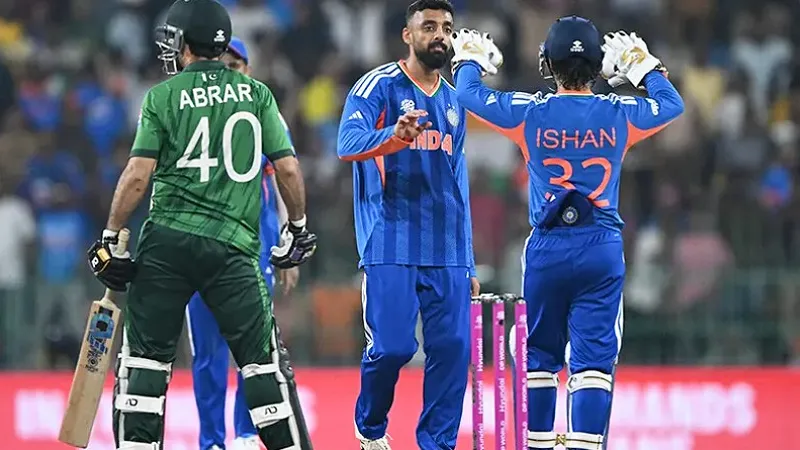

The India vs Pakistan rivalry remains cricket’s most-watched contest, but recent results suggest a growing competitive gap. In multiple India vs Pakistan World Cup match clashes, India’s tactical control and batting depth have reduced uncertainty, raising questions like Is IND-PAK rivalry overrated today. Even innings like Ishan Kishan’s 77 vs Pakistan highlight a pattern: India dictating terms. While the cricket hype still dominates global attention, on-field balance, not emotion, ultimately defines whether this is still the biggest rivalry cricket can offer.
India-Pakistan: Modern Rivalry Competitive Reality
The emotional weight of this rivalry remains unmatched, but match outcomes increasingly show one-sided patterns. India’s stronger squad depth, especially in ICC events, has translated into more consistent wins. Pakistan has remained unpredictable, capable of brilliance but lacking sustained execution.
This imbalance affects perception. Rivalries stay great when both teams trade wins regularly. When one side controls key moments repeatedly, psychological pressure shifts heavily, impacting future contests even before the first ball.
Tactical Control In Key Phases
India’s biggest advantage lies in controlling decisive match phases, powerplay, batting stability, and death-over execution.
In recent World Cup meetings:
- India’s batters rotated strike effectively in the middle overs
- Pakistan struggled to maintain pressure without wickets
- India’s bowlers defended totals through disciplined lengths
Conditions in Asian venues like Colombo or Dubai often favor balanced teams. India’s ability to adapt tactically rather than relying on individual brilliance has been decisive.
Impact Innings Define Modern Matches
Individual performances still shape headline moments, but they now reinforce India’s structural advantage.
For example:
- Kishan’s 77 came at a strike rate above 190
- India reached 175/7, a defendable total in pressure conditions
- Pakistan’s chase collapsed under scoreboard pressure
This reflects a broader trend: India’s batters accelerate without reckless risk, forcing Pakistan into reactive strategies. Such innings fuel cricket hype but also expose the performance gap behind the spectacle.
Commercial Power Versus Competitive Balance
Financially, this remains the biggest rivalry cricket has ever seen. Broadcast demand, sponsorships, and global audiences ensure unmatched commercial value.
However, revenue and hype cannot create competitiveness. Rivalries stay alive through uncertainty, not marketing. If results remain predictable, commercial strength may continue, but sporting intensity could decline.
Historical Benchmark Comparison Perspective
Traditionally, the outcomes of this battle have been much more unpredictable than they are now. An example is that Pakistan won the final of the Champions Trophy in 2017 against India using tactics of execution and bowling pressure to turn the expected results. Another example of this was the results of the T20 final in 2007 being determined by very fine margins when they took on each other for the championship.
These matches built the rivalry’s reputation because both sides consistently threatened each other. Today, India’s stronger bench strength and role clarity mirror dominant eras seen in other rivalries, where one team temporarily controls the narrative until balance is restored.
The rivalry between India and Pakistan has produced the largest commercial and emotional spectacle in cricket; however, there is ample evidence now to suggest that India has a significant tactical and structural advantage. The batting depth, ability to make responsible decisions, and execution have all improved; this has resulted in less resemblance to the historic unpredictability that existed between the two teams.
Key Takeaway
The rivalry’s global importance remains huge, but consistent Indian dominance has reduced its competitive balance in modern ICC tournaments.
FAQs
What makes India vs Pakistan the biggest rivalry cricket has seen?
Political history, massive fan bases, and high-pressure ICC matches make it globally unmatched.
Is the India-Pakistan rivalry overrated today?
The hype remains justified commercially, but recent one-sided results have raised competitive concerns.
How important was Ishan Kishan’s 77 vs Pakistan?
It showed how aggressive, controlled batting can define match momentum in modern World Cup contests.
Why does India perform better in World Cup matches?
India has shown stronger tactical discipline and better adaptation to pressure situations.
Can Pakistan make the rivalry competitive again?
Yes, but consistency in batting, bowling execution, and team strategy will be crucial.