

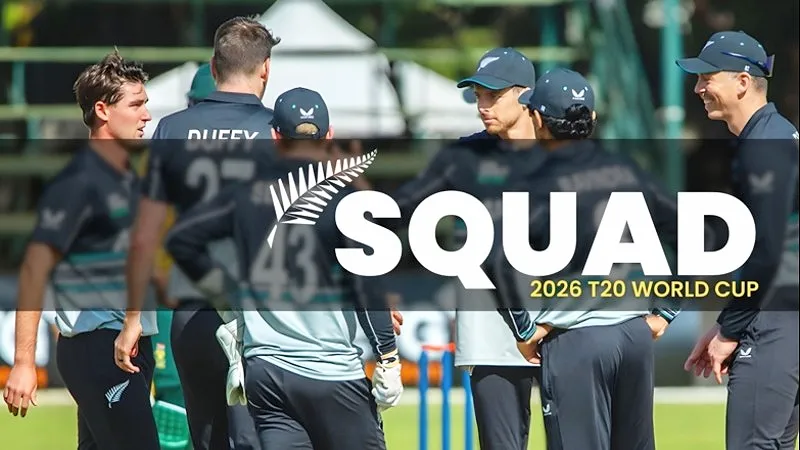

New Zealand cricket has an amusing irony. While we typically equate them with green tops, grey days, and balls that swing round corners, there’s no doubt about it now, the Black Caps have totally ‘gone full subcontinent.’ After being knocked out of the tournament before even getting a game in during 2024, it seems like The Kiwis are doing much more than licking their wounds; they’re changing their very DNA to survive the heat of India.
Engineering a Blueprint for the Chepauk Turn
If you look at where New Zealand is playing, specifically the three league matches scheduled at the Chepauk Stadium in Chennai, the selection strategy moves from “surprising” to “statistically inevitable.” Chepauk is the spiritual home of grip and turn. Consequently, New Zealand hasn’t just picked spinners; they’ve picked a versatile spin ecosystem.
Mitchell Santner and Ish Sodhi provide the control and the wrong ‘uns, respectively. By utilizing Michael Bracewell, Glenn Phillips, and Rachin Ravindra, the Blackcaps can technically field 12-16 overs of spin without compromising their batting depth. This isn’t the New Zealand of old that relied on three seamers and a prayer; this is a side built to strangle teams in the middle overs, forcing mistakes through dot-ball pressure rather than sheer pace.
Jacob Duffy and the Meritocracy of Wickets
Perhaps the most refreshing narrative in this squad announcement is the rise of Jacob Duffy. In a world often obsessed with franchise reputation, Duffy has kicked the door down with cold, hard numbers. Taking 81 international wickets in the 2025 calendar year is an absurd return, one that places him among the global elite in ICC rankings.
Duffy headlines a pace attack that looks vastly different without the omnipresent shadow of Trent Boult. While Lockie Ferguson brings the thunderbolts and Matt Henry brings the new-ball expertise, Duffy offers that relentless, nagging accuracy that is often more effective on slowing Asian pitches than express pace.
Navigating the Volatility of Mid-Tournament Departures
Here is where the skepticism creeps in. We are looking at a squad where two of the premier fast bowlers, Lockie Ferguson and Matt Henry, are expected to take paternity leave during the tournament. While life absolutely comes before cricket, from a tactical standpoint, this introduces a chaotic variable.
The “Travelling Reserve” role now becomes an active, pivotal position. Kyle Jamieson is not simply there as a water bearer; he needs to be mentally prepared to step into a high-pressure World Cup game with literally no warning, having flown across continents for his newborn child. It’s going to be difficult enough for team management to rotate players during a short tournament, but they have to consider how easily they can replace Jamieson, Adam Milne, and Jimmy Neesham for the top-tier professionals who are leaving the XI.
Reinjecting Velocity at the Top of the Order
The bowling plans are sound, but you can’t defend totals you don’t post. The return of Finn Allen is arguably the most significant boost for the batting card. Since 2024, Allen has been operating at a strike rate of 189.4. That is not just “aggressive”; that is world-class intent.
Coupled with Mark Chapman, who is striking at over 200 post-injury, New Zealand has finally moved away from the “accumulate and accelerate” model to a “hit from ball one” philosophy. On slow Indian decks, the Powerplay is the only time the ball comes onto the bat nicely. Having Allen and Devon Conway (providing the anchor role) up top gives them the best chance to maximize those first six overs before the spin choke sets in.
Key Takeaway
New Zealand’s 2026 strategy isn’t about raw power; it’s a high-stakes gamble on spin dominance and flexible roster management to navigate the dust of Chennai.
FAQs
- Why is Jacob Duffy leading the attack instead of more famous names?
Duffy took a staggering 81 international wickets in 2025, forcing his selection through undeniable form and consistency rather than past reputation.
- How will New Zealand handle the pacers leaving for paternity leave?
Kyle Jamieson is named as the travelling reserve and is expected to rotate into the starting XI seamlessly when Ferguson or Henry departs.
- What is the specific advantage of the “Chennai” strategy?
Chennai’s Chepauk stadium historically aids spinners significantly; New Zealand has stacked the squad with five legitimate spin options to exploit this.
Disclaimer: This blog post reflects the author’s personal insights and analysis. Readers are encouraged to consider the perspectives shared and draw their own conclusions.
Step into the world of cricket with JeetBuzz News—where expert opinions, trending Blogs, and behind-the-scenes insights meet all your favorite topics. Stay informed, stay entertained, and never miss the stories shaping the cricketing world—only on JeetBuzz News!