

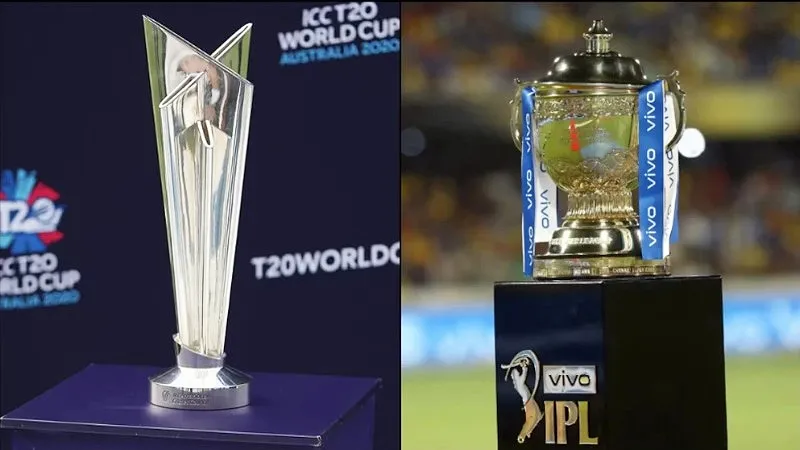

Low scoring in the T20WC is happening because tournament pressure, pitch usage, and risk-averse tactics are outweighing the aggressive batting patterns seen in leagues like the IPL. Despite fears that 300-run totals could become common, this World Cup has seen very few teams cross even 200, reinforcing why 300 is unlikely in high-stakes ICC events. As Jos Buttler’s T20WC comments highlight, teams play percentages rather than chase record-breaking scores. The contrast between IPL and T20 scoring comparison, especially on Indian pitches, shows how World Cup pressure vs bilateral cricket fundamentally alters scoring dynamics.
T20 World Cup 2026 Tournament Pressure Limits Risk
The T20 World Cup has established a different kind of decision-making scenario than bilateral cricket. With the T20 World Cup in 2026, there will be greater concern for teams to remain in the tournament rather than dominate the competition, leading to batters taking fewer chances at the start of the game (especially during powerplays) to minimize the risk of a collapse leading to their elimination from being able to qualify for the next stage of the tournament. This conservative approach has been reflected in the relatively low scoring rates during the T20 World Cup 2026, even though conditions on the pitch have suggested that the pitches would be good for batting.
IPL Conditions Don’t Translate
The IPL vs T20 scoring comparison is misleading without context. IPL games are played on fresher pitches with heavy batting depth and minimal consequence for losses. In contrast, World Cup venues often use recycled surfaces to manage scheduling, reducing pace and true bounce. Even on the same grounds, India pitches batting behaves differently under tournament conditions, making 250+ totals far harder to achieve.
Slower Bowling Dominance
A clear tactical trend in this tournament has been the effectiveness of slower deliveries. Cutters, back-of-the-hand slower balls, and pace-off variations have consistently disrupted hitting rhythm, especially at venues like Mumbai and Kolkata. Bowlers holding pace have benefited from tacky surfaces and larger square boundaries, suppressing boundary percentage and reinforcing why 300 is unlikely in pressure matches.
Scoring Data Tells the Story
From the opening phase of the T20 World Cup, 200-plus totals have been rare, and most matches have settled into the 160–190 range. Even strong batting sides have struggled to accelerate at the death, showing how low scoring in the T20WC is not accidental but systemic. The data support the idea that tournament context, not batting decline, is driving results.
World Cups Rewrite Batting Logic
Jos Buttler’s perspective mirrors a long-standing World Cup pattern. In the 2019 ODI World Cup, pre-tournament talk centered on 350 and 400 totals, yet the final was contested at 240 plays 240. That historical parallel reinforces how ICC tournaments consistently neutralize batting extremes. Buttler’s experience across IPL seasons and multiple World Cups adds credibility to the argument that scoring inflation slows when consequence rises.
Low scoring in the T20 2026 is not a failure of modern batting but a reflection of tournament realities. As World Cup pressure vs bilateral cricket intensifies, teams naturally reduce risk, especially on used surfaces where slower bowling thrives. The gap highlighted by the IPL vs T20 scoring comparison shows that format alone does not dictate scoring context. Looking ahead, scores may marginally rise in night games on fresher pitches, but sustained 250–300 totals remain unlikely. The takeaway is clear: in World Cups, adaptability beats aggression, and winning margins matter more than headline numbers.
Key Takeaway
Low scoring is driven by pressure, pitch management, and tactical caution, not a decline in batting quality.
FAQs
Why is 300 unlikely in the T20WC 2026?
Because tournament pressure, used pitches, and risk-averse strategies reduce boundary-hitting freedom.
How does World Cup pressure affect scoring compared to IPL?
Teams prioritize qualification and net run rate safety over aggressive batting, unlike league formats.
Are India’s pitches bad for batting in this World Cup?
Not bad, but slower and more variable due to pitch reuse and scheduling demands.
Can scoring improve later in the tournament?
Yes, marginally, especially in night games, but extreme totals remain unlikely.
Is Jos Buttler right about World Cup batting trends?
Historically, his view aligns with past ICC tournaments where scoring dropped under pressure.