

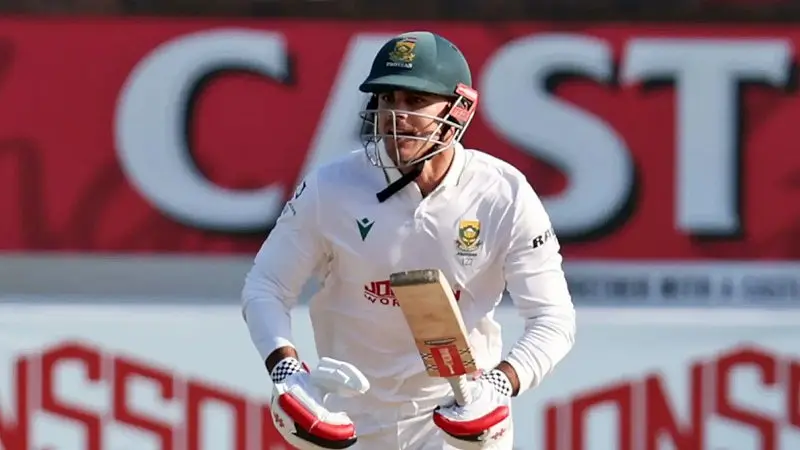

Because he scores faster and more reliably than anyone else in the middle order. Bedingham averages 36.92 at a strike rate of 67.42 after 16 Tests, ahead of Markram, Mulder and Rickelton, and he top-scored with 49 when South Africa were bowled out for 284 in Durban. Australia’s seamers will bowl at him again from 18 October, and the numbers say he is the batter best equipped to respond when they do. Few batters in the squad offer that mix of tempo and substance.
Durban Showed His Value Under Pressure
Australia won the opener by 214 runs, but the one South African innings that held together for long was built around Bedingham. His 49 was the top score in the 284 all out, and it ended when Smith held a catch at first slip off Cummins. That dismissal came late in an innings that had needed him to stay put.
The second innings brought 46 before Hazlewood removed him. Hazlewood finished the match with 2 for 54 and then 6 for 49, taking Mulder, Jansen, Harmer and Nortje along the way, and Rickelton was reportedly out to him in both innings. Bedingham’s two scores therefore came against the bowler at his sharpest, which counts for plenty.
Bedingham South Africa vs Australia Test 2026 pace
His career output explains why the selectors keep returning to him. He has 923 runs from 16 Tests at 36.92, with a strike rate of 67.42. That pairing of volume and tempo is rare in this batting order. Before Durban, the tally stood at 15 matches, 828 runs and an average of 36.00, so the two failures to reach fifty did not damage the figures.
There is one limit worth stating. No reliable split exists for how he fares specifically against pace or at home compared with away, so the case rests on overall output rather than a neat pace-only record. Even so, a quick scorer is useful against seamers, because he drags the bowlers off a length and relieves pressure on partners.
Rivals Measured Against the Numbers
Place him beside the other options, and the gap is clear. Markram has played 51 Tests and averages 35.91 at 57.85, Mulder averages 35.45 at 56.38 from 25 matches, and Rickelton sits on 34.57 with a strike rate of 52.51 after 16. All three are respectable, yet none match David Bedingham on both measures.
Further down the list, the picture weakens. Stubbs averages 30.46 from 15 Tests, Verreynne 29.09 from 32, and Breetzke has managed just 4.66 in two. That last sample is far too small to condemn anyone, but it hardly argues for pushing a debutant-like name above a proven performer against a quality attack.
Batter | Tests | Average | Strike Rate |
|---|---|---|---|
David Bedingham | 16 | 36.92 | 67.42 |
Aiden Markram | 51 | 35.91 | 57.85 |
Wiaan Mulder | 25 | 35.45 | 56.38 |
Ryan Rickelton | 16 | 34.57 | 52.51 |
Tristan Stubbs | 15 | 30.46 | 46.32 |
Kyle Verreynne | 32 | 29.09 | 55.80 |
Matthew Breetzke | 2 | 4.66 | 25.45 |
Selection Context for Gqeberha
The second Test runs from 18 to 22 October at St George’s Park, and South Africa has named 17 players. Breetzke comes in, and Stubbs drops out, while Rickelton is expected to keep wicket. Rabada and Nortje carry fitness doubts, and the final eleven has yet to be confirmed. Those details will shape how the order is arranged on the opening morning.
Those doubts matter for the batters. If the attack is weakened, the lineup may have to score heavily to protect it, and that raises the importance of the one man who combines pace of scoring with a sound average. Stubbs leaving also removes one competitor for the middle slots, which strengthens Bedingham’s claim.
Making the Case for His Place
The argument comes down to balance. Bedingham leads the group in both average and strike rate, produced two meaningful scores in a heavy defeat and met Hazlewood and Cummins at their best. Few other candidates can point to all three.
When South Africa pick a batter to answer Australia’s seamers, the Bedingham South Africa vs Australia Test 2026 pace question has a straightforward response. He is the most productive option available; he brings a quick scoring rate, and he has already shown the temperament to survive in Durban. That makes him the safest anchor in the middle order.
Do you back Bedingham to anchor the middle order against Hazlewood and Cummins in Gqeberha, or is someone else the safer choice? Tell us in the comments.
Frequently Asked Questions (FAQs)
What is David Bedingham’s Test average?
David Bedingham averages 36.92 in Test cricket. He has scored 923 runs in 16 Tests at a strike rate of 67.42, the highest rate among South Africa’s middle-order options listed here.
How did Bedingham perform in the first Test in Durban?
Bedingham scored 49 and 46 in Durban. His first-innings knock was the top score in South Africa’s 284 all out, though Australia still won the match by 214 runs.
When is the second Test between South Africa and Australia?
The second Test runs from 18 to 22 October at St George’s Park in Gqeberha. South Africa have named a 17-man squad that includes Bedingham and brings in Breetzke for Stubbs.
Who dismissed Bedingham in Durban?
Cummins and Hazlewood dismissed him, one in each innings. Smith held the first-innings catch at first slip off Cummins, while Hazlewood removed him for 46 in the second innings of the match.
Who keeps wicket for South Africa in the second Test?
Rickelton is expected to keep wicket. Verreynne is also in the 17-man squad, while Stubbs has been left out and Breetzke has come in for the match in Gqeberha.