

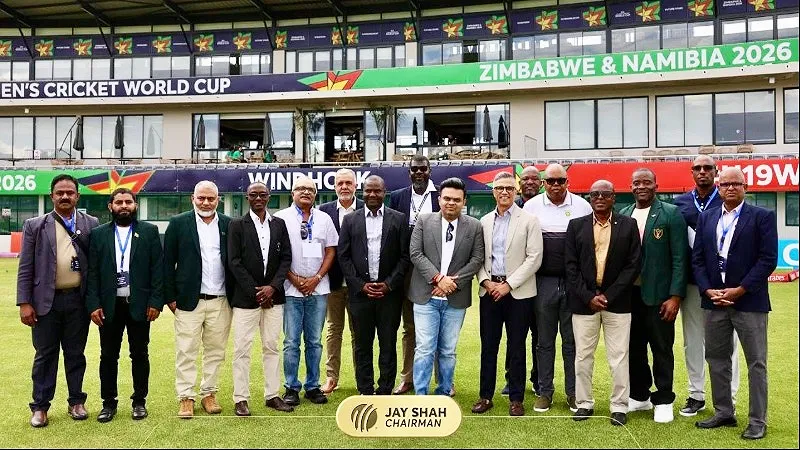

Jay Shah’s appearance was less a courtesy visit than a traveling checkpoint of world cricket authority, with a red pocket square and a sports jacket, and an unmistakable presence. Cricket is generally low-key about announcing who has power and prefers to work behind closed doors, firm handshakes, and the soft click of a camera snapping selfies; however, in Windhoek, the arrival of power came dressed as a man in a sports jacket, with a red pocket square and an unmistakable presence.
At 35, the President of the ICC (International Cricket Council) continues to be a lightning rod, being criticized for age, questioned about resume, and scrutinized by family lineage. However, in modern cricket, as with most sports, optics are everything, and from the moment Shah arrived in Namibia, which he has never been to, it was clear he felt at home. This was no ceremonial visit. In fact, Namibia, along with Zimbabwe and South Africa have agreed to co-host the 2027 Men’s World Cup, which is a 54-match tournament that will bring together power, logistical challenges, and political challenges.
Power Travels Faster Than the Game
Cricket infrastructure develops slowly; influence does not. Shah’s presence instantly drew African cricket administrators from across the continent, underscoring a familiar reality: decisions are made where authority physically appears. The ICC presidency has become less about symbolic stewardship and more about real-time diplomacy.
Unlike previous eras when ICC heads operated mostly behind conference doors, Shah’s approach mirrors modern governance: visibility equals leverage. His ease among administrators suggests a leader comfortable operating beyond the traditional Big Three axis, even if power still tilts unmistakably in that direction.
A World Cup Built on Imbalance
The numbers quietly tell their own story. Namibia’s brand-new Cricket Ground seats 5,000, with temporary stands planned to double capacity for 2027. They are likely to receive three World Cup matches. Zimbabwe, five. South Africa, a staggering 46.
This is not accidental; it’s structural. Broadcast economics, hotel capacity, and commercial gravity all pull matches southward. Yet the optics of “co-hosting” versus actual hosting reveal cricket’s ongoing contradiction: inclusivity in branding, inequality in allocation.
Comfort in Foreign Territory
What stood out wasn’t Shah’s speeches, it was his body language. Comparing the NCG to Newlands and Centurion wasn’t small talk; it was symbolic alignment. He was placing Namibia within cricket’s established architectural memory, subtly validating its place on the global map.
For a leader often painted as India-centric, this comfort mattered. It showed adaptability and a political awareness that associate nations respond as much to recognition as they do to funding.
The Silence Around Real Stakes
While selfies flourished in hospitality areas, one issue lingered conspicuously unresolved: Bangladesh’s security concerns over playing T20 World Cup matches in India amid political tension. Wednesday was the ICC’s deadline to resolve the matter.
Yet Shah was reportedly heading to a luxury game reserve to watch a lion being tranquillised. The symbolism was hard to miss. Cricket governance often proceeds with serene detachment even when member boards face genuine anxieties. Whether the decision rests with Shah, ICC CEO Sanjog Gupta, or the BCB itself, the silence spoke volumes.
Yet cricket’s deeper contradictions remain unresolved. Associate nations are welcomed, but sparingly rewarded. Political tensions are acknowledged, but carefully deferred. The ICC speaks of global growth while leaning heavily on a few commercial pillars.
Shah may well be suited to the role, comfortable, composed, and globally mobile. But the true test of his presidency won’t be how confidently he walks into unfamiliar grounds. It will be how boldly he addresses the familiar inequalities cricket has learned to live with.
Key Takeaway
Jay Shah’s ease in Namibia shows that cricket’s power structure is no longer hiding, but it’s still unevenly distributed.
FAQs
- What was Jay Shah doing in Namibia?
He visited to assess Namibia’s readiness for co-hosting the 2027 Men’s World Cup.
- Why is Namibia’s role in the World Cup limited?
Infrastructure, commercial demand, and logistics heavily favour South Africa.
- How does this visit reflect ICC politics?
It highlights centralized authority, strategic visibility, and unresolved governance tensions.
Disclaimer: This blog post reflects the author’s personal insights and analysis. Readers are encouraged to consider the perspectives shared and draw their own conclusions.
Step into the world of cricket with JeetBuzz News—where expert opinions, trending Blogs, and behind-the-scenes insights meet all your favorite topics. Stay informed, stay entertained, and never miss the stories shaping the cricketing world—only on JeetBuzz News!