

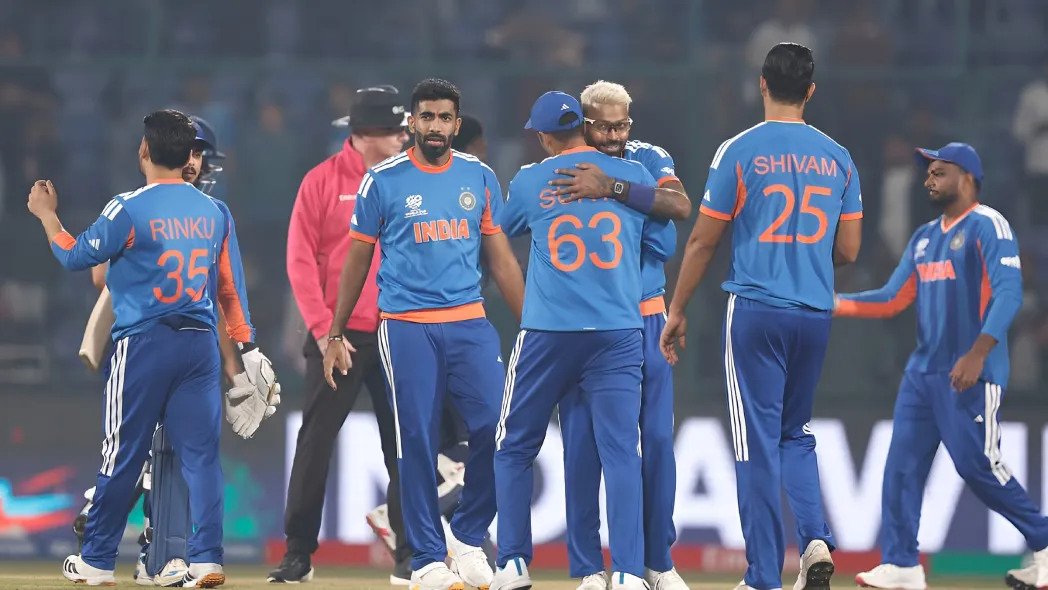

India’s powerplay bowling strategy vs Namibia at the T20 World Cup was a deliberate tactical experiment rather than a reactive mistake. Instead of relying immediately on Jasprit Bumrah, India distributed early overs to Hardik Pandya in the powerplay overs and even explored Shivam Dube’s bowling in the powerplay, indicating a broader India plan A vs plan B strategy approach. The move also fuels the Arshdeep Singh selection debate, especially regarding flexibility in bowling combinations ahead of tougher opposition. This was less about Namibia and more about squad readiness for the next high-pressure fixture.
Powerplay Experiment, Not Panic
India deviated from their traditional structure by not front-loading Bumrah or a primary strike spinner. Against a lower-ranked opponent, this reduced the immediate wicket-taking threat but allowed management to test alternative bowling combinations.
In ICC tournaments, teams often balance dominance with preparation. Here, India appeared confident in their batting total and comfortable testing depth. The risk factor exists especially in World Cups, but tournament campaigns are long. Experimenting early can prevent rigidity later. This wasn’t randomness. It was scenario rehearsal.
Hardik Pandya’s Expanded Role
One of the most noticeable shifts was the increase in Hardik Pandya’s powerplay overs. Traditionally used as a middle-overs enforcer or partnership breaker, Hardik’s bowling early suggests contingency planning.
If Arshdeep Singh’s selection debate tilts toward rotation or rest, Hardik becomes essential with the new ball. His angle and seam movement provide variation, but it also raises workload concerns. Using him upfront signals tactical adaptability, especially in conditions that may offer slight seam movement. India is preparing options, not just picking favorites.
Bowling Combinations Under Evaluation
The inclusion of Shivam Dube’s bowling in powerplay further underlines experimentation. Dube is not a conventional new-ball specialist, which makes the move strategically interesting.
India appears to be testing:
- Seam-heavy starts vs spin-heavy starts
- Left-arm angle vs right-arm hit-the-deck
- Matchup-based overs depending on the opposition’s top order
This reflects a deeper evaluation of bowling combinations before facing stronger teams. The pitch conditions also matter if surfaces slow down later in the tournament, early seam aggression may be less essential. The flexibility shown here suggests the India team selection ahead of the next match is still fluid.
Plan A vs Plan B Dynamics for T20WC
India’s traditional Plan A includes Bumrah attacking early and Arshdeep shaping the ball across right-handers. Plan B introduces shared responsibility. This shift reduces predictability. Against elite sides, unpredictability can disrupt pre-match analysis. However, experimentation carries risk, especially if early wickets don’t fall. The India powerplay bowling strategy vs Namibia T20WC reflects calculated exposure: test depth when stakes are manageable.
Tournament Pattern Recognition
Strategic flexibility in ICC events is often the difference between semifinal exits and title runs. Tournament-winning sides rarely rely on a single formula; they refine options under controlled pressure. This Namibia game fits that broader strategic philosophy rather than isolated experimentation.
India had a deliberate strategy with respect to their tactics throughout the T20 WC against Namibia. The strategy used by India to take wickets during the power play against Namibia represents an approach that extends beyond this match. By allowing Hardik Pandya to bowl in the power play, investigating the role that Dube had at the start of the innings, and carefully managing Bumrah’s workload, India was able to expand the range of bowling combinations available to them for games with high stakes.
The move may look risky on the surface, but in tournament cricket, depth beats dependency. Expect India to revert to Plan A against stronger opposition but with greater confidence in backup options. This wasn’t complacency. It was calibration.
Key Takeaway
India used the Namibia match to strategically test alternative powerplay bowling combinations without abandoning their primary tournament blueprint.
FAQs
What is India’s usual powerplay bowling combination in T20 World Cups?
Typically, Jasprit Bumrah and a left-arm seamer like Arshdeep share early overs, with occasional spin if conditions demand.
Why did Hardik Pandya bowl in the power play vs Namibia?
India appears to be expanding its role as part of flexible bowling combinations for future matches.
Is Arshdeep Singh likely to be rested in the upcoming matches?
Rotation is possible, subject to opposition and workload management, but there is no official confirmation.
Which bowling combinations work best on slower pitches?
Teams often mix seam upfront with spin in middle overs, adjusting based on bounce and grip.
Disclaimer: This blog post reflects the author’s personal insights and analysis. Readers are encouraged to consider the perspectives shared and draw their own conclusions.