

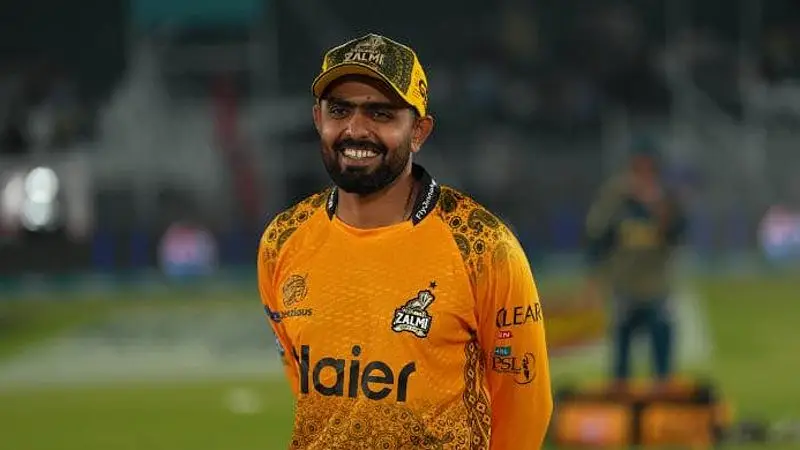

Peshawar Zalmi and Islamabad United enter this season carrying different kinds of uncertainty. Zalmi revolves around one player, Babar Azam, who managed only 288 runs last season, well below the standard his anchoring role demands. United’s uncertainty is structural, a rebuilt batting lineup with unclear role distribution, and a spin department lacking match rhythm heading into a tournament where Karachi’s slow surfaces will test spin quality specifically. Two contenders. Two problems. Which one proves more damaging across the group stage?
Zalmi’s All-Round Depth Is Their Edge
Peshawar Zalmi’s tactical advantage is flexibility. Aamer Jamal, Michael Bracewell, and Iftikhar Ahmed provide genuine contributions across both departments, which means the captain can adjust combinations between Lahore and Karachi without breaking the XI’s balance. On a fast Lahore surface, the pace options do the work. On a gripping Karachi pitch, the all-round options absorb the middle overs without exposing a specialist gap. That adaptability across venues is rare in PSL squads and gives Zalmi a structural foundation that survives fixture variation better than most rosters in this tournament.
United’s Pace Is Real, but Spin Is Exposed
Islamabad United’s bowling attack carries genuine pace depth capable of exploiting new ball movement and executing yorkers in the death overs. On Lahore’s true surface, that combination makes them one of the most dangerous bowling sides in the competition. The problem is Karachi. Shadab Khan and Imad Wasim lead the spin department, but both arrive without the match rhythm that PSL middle overs demand against set batters on a slow surface. Spin that lacks sharpness on a gripping pitch does not just fail to take wickets, it leaks runs in the phase where containment is the minimum requirement. That is a specific liability United must manage from their first Karachi fixture.
Why PSL 2026 Venues Splitting These Two Teams
PSL 2026’s two-venue format, Lahore and Karachi, creates a built-in split that benefits one side of this rivalry consistently. Lahore favours United’s pace and aggression. Karachi favours Zalmi’s spin tolerance and all-around adaptability. Across a 10-match group stage split evenly between both venues, the team that handles the less favourable venue better accumulates the points that separate playoff qualifiers from early exits. Zalmi’s squad composition makes them more equipped to absorb the Lahore disadvantage than United is to absorb Karachi’s spin test. That is a small but compounding advantage across a full group stage.
Babar Below His Best Changes Everything
Babar Azam’s 288 runs last season are the number Peshawar Zalmi cannot afford to repeat. Their batting structure is built around him absorbing the powerplay, converting starts into 40-plus innings, and giving the middle order a platform rather than a pressure situation. When that function fails, which 288 runs across a full PSL campaign represents, the batters below him arrive under conditions they were not selected to manage. Zalmi has enough depth to stay competitive if Babar produces 350 or more. Below that threshold, their top order becomes brittle, and the all-round lower order carries more than it should.
United’s Batting Reset Adds Risk
Losing several key batters from their previous campaign leaves Islamabad United without the role clarity that short tournaments require. Their aggressive batting philosophy works when the personnel know their positions, their batting partners, and the situations that suit their game. A rebuilt lineup needs time that PSL does not provide. If United’s batting underperforms in the first four matches, their bowling carries the team, which is sustainable for two or three fixtures but not across a 10-match group stage where runs won and lost decide net run rate alongside points.
Zalmi holds the edge on paper. United have enough pace to make every match competitive. This rivalry will clarify itself by match five of the group stage.
- Who finishes higher in 2026, does Zalmi’s adaptability or United’s pace depth prove more decisive? Drop your prediction and follow for PSL updates.
FAQs
What is the biggest strength of Peshawar Zalmi in PSL?
Their all-round balance allows them to adapt easily across different pitch conditions.
Why is Babar Azam important for Peshawar Zalmi?
He anchors the batting lineup, and his form directly controls the team’s scoring approach.
What is Islamabad United’s main weakness this season?
Their spin attack lacks form and experience, especially compared to their pace and strength.
How will pitch conditions affect Islamabad United’s performance?
They may perform better on pace-friendly tracks but struggle on slower, spin-heavy surfaces.
Can Islamabad United rebuild their batting quickly in the PSL?
It is possible, but short tournaments make it difficult to establish consistency quickly.