

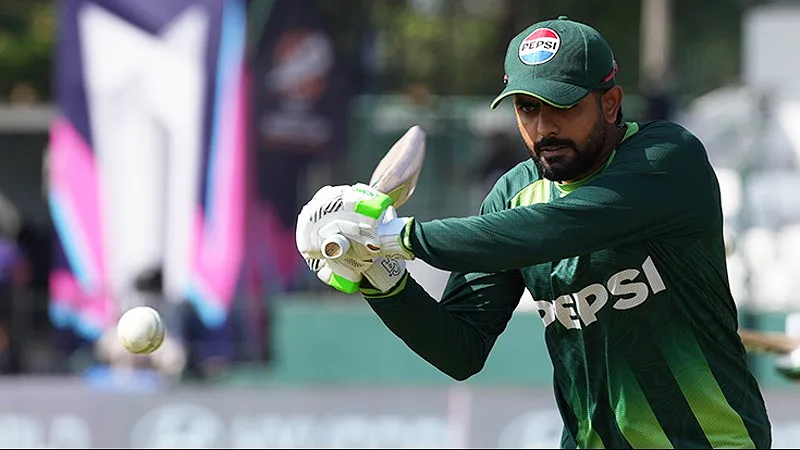

Babar Azam is under scrutiny because his inconsistent form has begun to affect Pakistan’s scoring momentum in T20 cricket, especially during the crucial middle overs. Despite his pedigree, questions around his batting position and T20 role have intensified after comments from experts like Ricky Ponting on Babar Azam and Ravi Shastri’s comments highlighted a declining impact rather than intent. With Pakistan’s T20 batting issues becoming more visible at the World Cup level, the debate is no longer about talent; it’s about fit, timing, and whether Babar is being used at the right stage of the innings.
Early Momentum Pressure
In the T20 World Cup, batters at the top are expected to influence tempo early. Babar Azam’s recent starts have struggled to generate boundary pressure, which shifts responsibility onto the non-striker. When a top-order batter absorbs deliveries without scoring freely, bowling sides delay risk and tighten middle-over plans. This issue becomes magnified on slower surfaces where rotation alone doesn’t offset dot-ball pressure.
Middle-Overs Impact Decline
The concern raised by Ricky Ponting on Babar Azam is not dismissal-based; it’s about impact per ball. Middle overs demand either boundary intent or matchup exploitation, particularly against spin. When Babar operates below optimal acceleration, Pakistan’s innings often peak late, leaving little margin if wickets fall. This tactical imbalance has fed into broader Pakistan T20 batting issues.
Does Batting Position Matter in the T20 World Cup?
The debate around whether Babar Azam bats at No.3 is rooted in access, not demotion. An earlier entry allows exposure to Powerplay field restrictions, reducing boundary difficulty if power has dipped marginally. Batting position T20 decisions are about maximizing strengths, timing, and placement rather than forcing late-innings explosiveness against spread fields.
Conditions and Tactical Fit
On slow tracks in Asia, non-power hitters need to construct runs before the bowler is able to find their length and settle into defensive line lengths. Concerning Ravi Shastri’s comments about Babar Azam holding intent over merely surviving, the implication was to attack the boundary early to relieve pressure. If the Pakistani team does not adjust its game plan, then they put themselves in jeopardy of carrying an anchor without a means of acceleration, particularly when playing against disciplined spin attacks.
When Greats Must Adapt
Although elite batters from different eras have had many similar crossroads, Virat Kohli made an adjustment during the latter part of T20 by getting aggressive at the beginning; meanwhile, Kane Williamson could not find a new tempo and struggled to fit into the way New Zealand was evolving in their T20 game (and struggled to be relevant). These examples illustrate a general pattern of what can occur: pedigree gives you opportunities, but adaptation gives you longevity. The scrutiny associated with Babar’s situation continues this cyclical nature of history regarding World Cups, but it will also be determined by issues within his role clarity, not just the way he is performing.
The scrutiny around Babar Azam is not a rejection of quality, but a reflection of evolving T20 demands. His inconsistent form becomes a tactical issue only when it limits Pakistan’s scoring flexibility across phases. Adjusting his batting position, T20 role potentially earlier could unlock value without overexposing him to late-innings pressure. If Pakistan recalibrates usage rather than expectation, Babar remains central to their campaign. If not, the gap between reputation and impact may continue to grow. The coming matches will reveal whether adaptation arrives in time or whether Pakistan’s T20 structure continues to work against its most gifted batter.
Key Takeaway
Babar Azam’s challenge isn’t form alone; it’s adapting his role to modern T20 tempo before Pakistan pays the price.
FAQs
Why is Babar Azam facing criticism in T20 cricket?
Because his recent impact per ball hasn’t matched modern T20 tempo expectations, especially in the middle overs.
Should Babar Azam bat at No.3 in T20s?
Many analysts believe earlier access to Powerplay overs could better suit his skillset.
What did Ricky Ponting say about Babar Azam?
Ponting highlighted concerns over reduced power and middle-order effectiveness.
How do Pakistan’s T20 batting issues affect Babar’s role?
Team-wide scoring pressure amplifies scrutiny on top-order anchors.
Can Babar Azam adapt his T20 approach?
History suggests elite batters can adjust quickly if role clarity improves.