

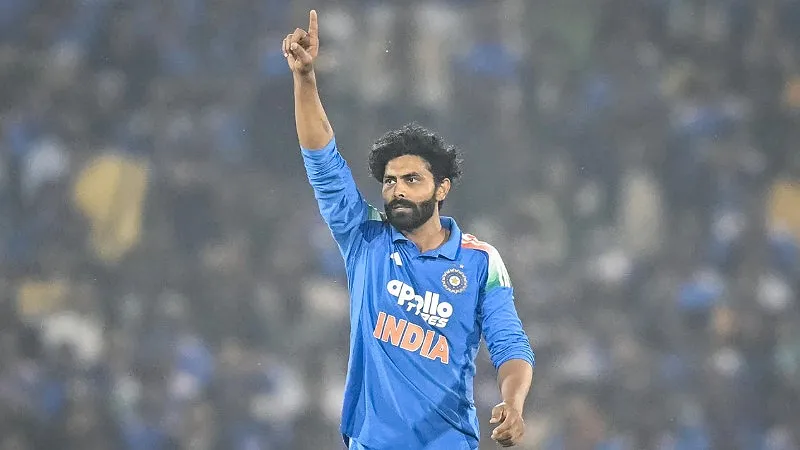

Some time ago, Ravindra Jadeja seemed to have become a fixed entity in ODIs, as he was guaranteed to bowl 10 stingy overs, pick up 2 wickets, and always provide a last-ditch effort with the bat, which would guarantee frustration to opposition captains. However, as age does, cricket occasionally removes those guarantees.
India won the first ODI against New Zealand in Vadodara on January 11, yet Jadeja’s personal scorecard read like a warning label: 0 wickets for 56 runs in nine overs, followed by 4 runs off 5 balls at No. 5. At 37, this wasn’t just an off day; it looked uncomfortably like a trend.
Since being left out of the Australia tour in October 2025, Jadeja has returned for the home series against South Africa and New Zealand. The question is no longer why he’s picked, but what exactly he’s still providing. When India already has a stable batting core, Jadeja’s ODI value hinges on bowling impact, and that currency appears to be depreciating fast.
Numbers That New Zealand Doesn’t Fear
Although Jadeja has some good statistics overall in ODIs (232 wickets from 208 matches), when he is bowling at New Zealand, his batting performance is also greatly reduced.
In seventeen One Day Internationals (ODI) matches against New Zealand, Jadeja took ten wickets with an average of seventy-seven point six and a strike rate of ninety-one point two. That is not controlling your opposition; that is holding back your opposition.
Yes, his batting numbers against New Zealand are respectable (390 runs at 43.33), but India’s top and middle order no longer need insurance runs from No. 7 or 8. They need wickets. And historically, Jadeja hasn’t delivered those against this opponent.
Control Without Consequence Is Not Enough
Modern ODI cricket has redefined the role of spinners. Economy alone no longer justifies the selection impact it does. In Vadodara, New Zealand batters rotated Jadeja with comfort, neutralizing his angles and rarely taking risks.
In ODIs since the start of 2025, Jadeja has taken 12 wickets from eleven ODIs, averaging 38.08. In fact, Jadeja has only finished his ten-over spell two times in the last eleven matches. When you entrust a player with the task of changing games through bowling, you do not reduce the number of overs that player can bowl.
This is the quietest alarm bell. Jadeja isn’t being attacked; he’s being ignored. And for a bowler, invisibility is worse than punishment.
A Finisher Who No Longer Finishes
Jadeja’s batting role has slipped from stabilizer to afterthought. Once trusted at No. 7, he’s now drifting to No. 8, often walking in during the final overs. The problem? The acceleration just isn’t there.
Since 2023, Jadeja has scored 419 runs in 25 innings at a strike rate of 82.48, a number that looks painfully modest in the age of 200-plus totals. Even more damning: only five sixes in 37 matches.
At death, strike rate isn’t a bonus; it’s the job description. If Jadeja can’t clear the ropes consistently, India may be better served by a younger all-rounder who at least threatens the boundary.
Key Takeaway
Jadeja’s ODI problem isn’t economy, it’s invisibility.
FAQs
- What went wrong for Ravindra Jadeja in the first ODI?
He went wicketless, conceded 56 runs in nine overs, and scored only four runs while batting higher than usual.
- Why is Jadeja’s record against New Zealand concerning?
He averages 77.60 with the ball against them, indicating minimal wicket-taking impact.
- How could India replace Jadeja in ODIs?
India can explore younger spin-bowling all-rounders who offer higher strike rates and wicket-taking intent.
Disclaimer: This blog post reflects the author’s personal insights and analysis. Readers are encouraged to consider the perspectives shared and draw their own conclusions.
Step into the world of cricket with JeetBuzz News—where expert opinions, trending Blogs, and behind-the-scenes insights meet all your favorite topics. Stay informed, stay entertained, and never miss the stories shaping the cricketing world—only on JeetBuzz News!