

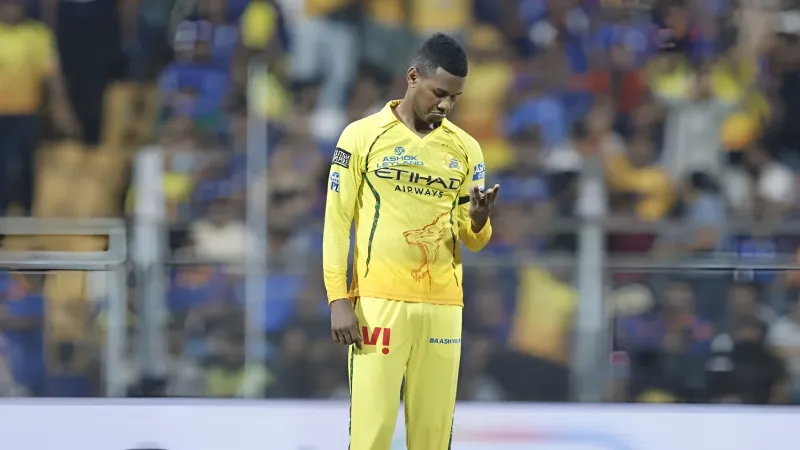

Akeal Hosein walked off the Wankhede field with figures most spinners only dream of in T20 cricket. Four wickets for 17 runs. He didn’t just take wickets against the Mumbai Indians. He dismantled their batting structure from the first over through to the middle overs, controlling the powerplay with the new ball, deceiving both right-handed and left-handed batters with the same delivery, and converting pressure into wickets at every phase Chennai Super Kings needed him most. No spinner in this match came close to matching his impact across all four overs.
Powerplay Mastery With New Ball
Most left-arm spinners wait until over seven. Hosein doesn’t. His decision to attack from ball one in the power play against Mumbai’s top order was CSK’s most aggressive bowling call of the match, and it paid off immediately.
His angle from around the wicket cuts off the leg side and forces attacking batters into low-percentage strokes. Against Quinton de Kock, he maintained that line even after a boundary, refusing to change his field or back away from the plan. After conceding that boundary in his second over, he adjusted his length instantly and kept scoring below six an over for the rest of the powerplay. That recovery under pressure separates bowling options from genuine bowling assets, and Hosein demonstrated it without flinching.
Arm Ball Creates Batting Confusion
Hosein’s stock delivery grips and turns. His arm ball doesn’t. The problem for Mumbai’s batters was that both deliveries looked identical from the hand until the moment of release.
The arm ball moves into right-handed batters and away from left-handed ones. Batters who committed forward, expecting the turning ball, found themselves beaten on the inside edge. Batters who held back for the arm ball got trapped in front or watched it slide past the outside edge. That’s not mystery spin. It’s precision deception repeated across four overs without a loose delivery in between. What made it even harder to counter was that Hosein didn’t telegraph the variation through his action, his grip, or his run-up. Mumbai’s batters had no reliable read.
IPL 2026 Pitch Read Was Brilliant
The Wankhede surface in this fixture offered more grip than Mumbai pitches typically provide early in the season. Hosein identified that within his first over and immediately recalibrated his plan.
He bowled fuller than usual, extracting variable bounce from the surface rather than rushing batters with pace. Some deliveries skidded through low. Others gripped and jumped sharply off a length. His ability to produce two completely different ball behaviors from the same surface in the same spell kept Mumbai’s middle order permanently unsettled and unable to trust their footwork. Most spinners take two or three overs to find that adjustment. Hosein found it in his first six deliveries and never let go of it.
Hosein Redefines CSK Spin Attack
Ravindra Jadeja‘s reputation was built on containment and accuracy in the middle overs. Hosein brings those same qualities but adds powerplay aggression that Jadeja rarely operates with in T20 cricket.
CSK are now using him as a wicket-taking option from over one rather than a containing option from over eight. That shift in role suits Hosein’s skill set perfectly and reflects how Chennai’s think tank has evolved its spin strategy across this season. His 4 for 17 wasn’t a one-over burst. It was sustained pressure across four overs that showed exactly why IPL 2026 rewards spinners who attack rather than defend. Hosein doesn’t just contain. He converts pressure into wickets at the phase where wickets are hardest to take.
- Is Akeal Hosein now CSK’s most dangerous bowling weapon against the Mumbai Indians, or can Noor Ahmad match his powerplay threat in the IPL? Drop your pick in the comments and follow for IPL updates.
FAQs
Q1: How did Akeal Hosein perform against the Mumbai Indians?
He took 4 wickets for 17 runs in one of the most impactful spin spells of the season.
Q2: Why does Hosein bowl in the power play?
His arm ball and tight line restrict scoring and create early wicket opportunities with the new ball.
Q3: How does Hosein compare to Ravindra Jadeja in T20s?
Both use accuracy and pace variation, but Hosein attacks in the powerplay while Jadeja focuses on middle overs containment.
Q4: What made Wankhede suit Hosein in this match?
The pitch gripped and bounced unevenly, allowing his stock ball to turn sharply and his arm ball to skid through.
Q5: Is Akeal Hosein a regular starter for CSK?
Yes, his powerplay role against both right-handed and left-handed batters makes him a consistent selection at spin-friendly venues.
Disclaimer: This blog post reflects the author’s personal insights and analysis. Readers are encouraged to consider the perspectives shared and draw their own conclusions.