

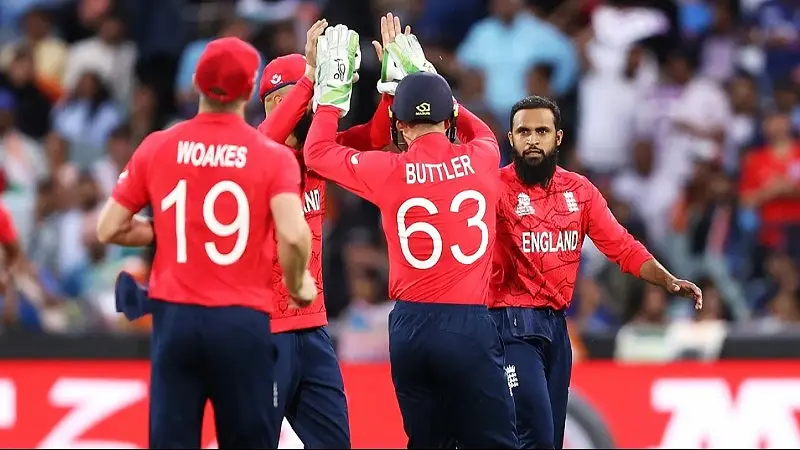

Not many leg-spinners can go under 80 km/h in T20 cricket and actually become harder to hit. Rashid can. His economy rate holds firm when he reduces pace, his wicket-taking rate climbs, and batters who think they’ve read him end up dragging catches to mid-off or stumbling past a wrong ‘un on a sluggish surface. Understanding when slower bowling works and when it backfires tells you everything about playing spin on slow pitches and the fine line between tactical discipline and telegraphing your plan.
Flight, Dip, and What Batters Hate Facing
Slow deliveries from leg-spinners aren’t simply about pace removal; they’re about disrupting the batter’s internal timing clock. When Rashid drops under 80 km/h, the ball hangs fractionally longer in the air before pitching. On a gripping surface, that extra dwell time amplifies turn and drop. Batters who commit early end up through the shot before the ball arrives.
The instinctive counter is to charge down the track and kill the length. But that’s exactly where Rashid wants you. A batter who doesn’t time the charge perfectly either ends up stumped or misses the pitch of the ball entirely, chipping a tame catch to mid-off. It’s a trap dressed up as a loose ball.
The Economy Rate Stays Stable — That’s the Key
A common objection is that slower bowling invites the batter to manipulate the ball. Sit back, hit over the top, collect easy runs. But Adil Rashid’s spell data tells a different story. Across sub-80 km/h deliveries in T20 internationals, his economy rate across different pace brackets remains comparable. There’s no significant spike in runs conceded when he reduces pace.
That’s the crucial detail. If going slower costs him runs while gaining wickets, it’d be a high-risk option. Instead, it appears to be a low-risk upgrade with the same control and better results. That balance is what makes variation a skill rather than a gamble.
When the Nepal Match Became a Warning Sign
The flip side showed up against Nepal. When Rashid leaned too heavily on extreme pace reduction without a gripping surface to back it up, batters adjusted. On flatter pitches, the extra air time becomes a gift rather than a trap. Batters pick the length earlier and manufacture their own timing.
The lesson wasn’t that slower is bad. It was that extreme slowness without surface support is a telegraph. Once a batter reads the plan, the variation loses its edge.
Rashid, at his best, doesn’t bowl one pace all match. He mixes it, looping one delivery, flattening the next, dropping a slider in between. The slower ball works because it arrives in a context where it’s unexpected. Use it every third delivery, and it stops being a surprise.
Why ICC Pitches Suit Adil Rashid’s Bowling Speed Variation
Worn ICC tournament surfaces are where this approach is most dangerous, and that’s by design. Used pitches grip more, slow the ball naturally off the surface, and amplify dip from a high-looping delivery. Bilateral series on flat tracks in South Africa or the Caribbean are a different beast entirely.
Compare him to Rashid Khan of Afghanistan, who runs a similar pace-reduction template with devastating results in global events. Both spinners understand that middle-over pitches at a T20 World Cup behave differently from a franchise league surface six weeks earlier. Adil Rashid’s bowling speed variation is most effective in exactly those high-stakes, worn-track conditions, and England’s selectors know it. Reading that surface shift and bowling to it is what separates tournament bowlers from statistical fillers.
Key Takeaway
Adil Rashid’s slower leg-spin works best when pace reduction is controlled, surface-backed, and tactically timed.
FAQs
What makes Adil Rashid effective under 80 km/h?
His slower deliveries increase dip and turn, forcing batters to generate their own pace and mistime shots.
How does the economy rate analysis support Rashid’s slower bowling strategy?
Comparative data suggests his control remains stable even when he reduces speed, limiting downside risk.
Why was the Adil Rashid vs Nepal match analysis significant?
It showed that overusing extreme slowness without ideal pitch support can reduce effectiveness.
Can playing spin on slow pitches neutralize Rashid’s threat?
Strong back-foot play and precise footwork can reduce risk, but misjudgment against flight remains costly.