

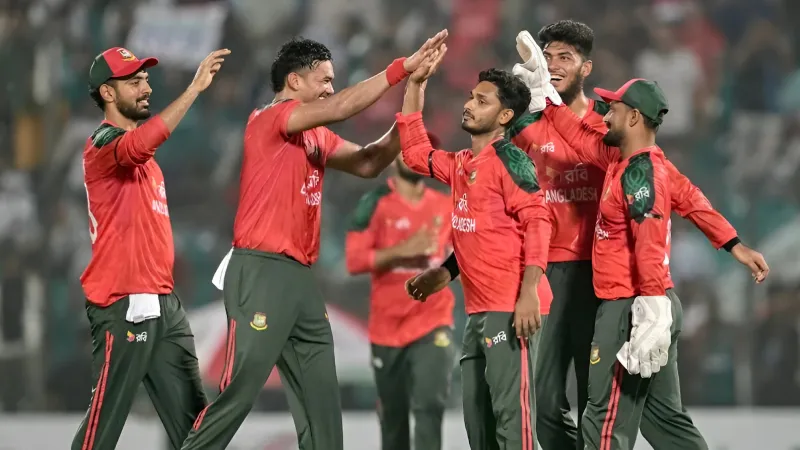

Mohammad Salahuddin & Asif Nazrul controversy centers on who truly decided Bangladesh’s participation stance in the ICC Men’s T20WC. Assistant coach Mohammad Salahuddin publicly accused former sports advisor Asif Nazrul of reversing his position and misrepresenting the Bangladesh boycott decision. While Nazrul initially suggested the government drove the call, he later indicated the Bangladesh World Cup decision came from the board and players. This clash has fueled confusion over the Bangladesh government’s T20WC stance and why Bangladesh missed the momentum during a critical global event.
Governance Breakdown and U-Turn Claims
At the heart of the controversy is accountability. Salahuddin claims Nazrul first positioned the boycott as a government-led move before later attributing responsibility to the board and cricketers. That alleged reversal triggered the public fallout.
In cricket governance, decision-making authority typically rests with the national board, in this case, the Bangladesh Cricket Board. Any perceived political override complicates institutional clarity. The confusion over the Bangladesh Cricket Board World Cup decision has therefore become as significant as the decision itself.
From an analytical standpoint, ambiguity in communication is damaging. International tournaments operate on strict timelines, squad registrations, and logistical planning. Mixed signals undermine preparation cycles and institutional credibility.
Player Morale and Psychological Toll
One of the strongest elements in the controversy is its emotional dimension. Salahuddin framed the issue as the “killing of a dream,” emphasizing the psychological cost to players.
A World Cup appearance is often the peak milestone in a cricketer’s career arc. Missing participation disrupts not just competition exposure but endorsement visibility, ranking influence, and long-term valuation. When assessing why Bangladesh missed the rhythm, morale becomes a measurable factor.
High-performance environments rely on stability. Sudden administrative shifts affect preparation intensity, role clarity, and tactical rehearsal. Even short-term uncertainty can impact batting intent, bowling execution under pressure, and leadership confidence.
Tactical and Competitive Impact of the T20 World Cup
From a competitive lens, tournament absence or even participation uncertainty affects momentum. The ICC Men’s T20 World Cup typically features high-intensity matches across varied conditions, from spin-friendly surfaces to high-scoring venues.
Preparation for such events requires:
- Defined batting order stability
- Death-over bowling simulations
- Powerplay strategy refinement
- Adaptation to dew, pitch pace, and venue-specific bounce
If administrative turbulence disrupts camp planning, the tactical cost is real. The Bangladesh boycott decision debate, therefore, extends beyond politics into performance risk management.
Without stable communication between the Bangladesh government and the board authority, high-performance planning becomes reactive rather than strategic.
Institutional Credibility and Future Risk
The long-term consequence of the controversy lies in governance trust. Public disagreements between coaching staff and political officials weaken stakeholder confidence.
Sponsors, ICC stakeholders, and players expect clarity in decision chains. If conflicting narratives continue, future tournament preparations could face reputational strain. For Bangladesh cricket, the priority now must be transparent policy alignment between government advisors and the Bangladesh Cricket Board to prevent similar crises.
This ultimately exposes a governance communication breakdown rather than a purely sporting dispute. While the Bangladesh T20WC boycott decision remains politically sensitive, the larger issue is institutional clarity and player welfare.
If Bangladesh wants to avoid repeating the instability at a crucial moment, administrative alignment is essential. Going forward, transparent decision protocols between government authorities and the board will determine whether this episode becomes a one-off conflict or a recurring structural weakness.
Disclaimer: This blog post reflects the author’s personal insights and analysis. Readers are encouraged to consider the perspectives shared and draw their own conclusions.