

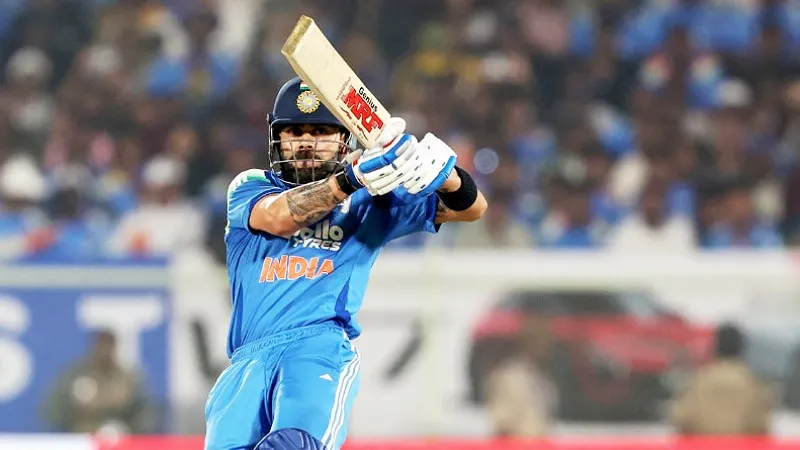

For nearly two decades, Virat Kohli’s ODI greatness has been built not on audacity, but on denial of risk, denial of chaos, denial of the spectacular for the sake of the inevitable. While others flirted with disaster-chasing strike rates and highlights, Kohli perfected something far harder: inevitability. You knew the ending before the innings began. Yet cricket, like time, eventually demands curiosity over control.
Since the South Africa ODI series, Kohli has quietly, almost mischievously loosened the reins. This isn’t decline masked as aggression, nor desperation dressed as intent. This is a player who has already conquered the format, now asking a dangerous late-career question: What if I stopped protecting the innings so much?
Risk Aversion Was the Original Superpower
Kohli’s ODI dominance was never accidental. He built a game that made risk optional rather than necessary. By being supremely fit, technically watertight, and mentally obsessive, he delayed risk bigger into innings than almost anyone in history.
That approach kept him elite for 18 years without ever being the most destructive batter on the field. ODIs rewarded that discipline. T20s punished it. Tests occasionally resisted it. But ODIs? ODIs bent to it. The irony is that this same mastery may have hidden his true offensive ceiling.
Early Overs No Longer Feel Sacred
The most startling shift isn’t how Kohli is scoring, it’s when. In the two ODIs batting first against South Africa, Kohli hit a six inside his first 20 balls in both matches. Across the previous two years, he’d managed that only once, and that too via a free hit.
The Ranchi ODI marked another first: more than one six in the powerplay while batting first. By the 20th over, he’d struck four sixes, doubling his previous career-best at that stage. This isn’t recklessness. Its calculation is shaped by modern ODI realities, especially dew, which routinely swings 40–50 runs under lights.
Freedom Is Infectious at the Other End
In Vadodara against New Zealand, Kohli’s approach did something subtler but perhaps more valuable: it liberated Shubman Gill. He, navigating personal turbulence and facing New Zealand’s best possible attack for those conditions, didn’t need reassurance; he needed space. Kohli provided it not with words, but with lofted drives and charged advances.
Gone were the familiar third-man nudges to “get in.” Instead, Kohli attacked immediately, forcing bowlers to recalibrate and allowing Gill breathing room. Leadership, in this phase of Kohli’s career, is expressed through intent rather than instruction.
Situational Batting Has Been Voluntarily Benched
Perhaps the most revealing admission came post-match: Kohli said he doesn’t currently feel the need to “play the situation” or think about milestones. That’s seismic.
For years, Kohli was situational batting personified. Chase math, risk windows, and opponent psychology all meticulously computed. Now, he’s allowing himself to accept a cricketing truth most batters fear: some balls have your name on them. Trusting teammates to finish the job is not a weakness. It’s release.
Two Phases, One Ruthless Plan
The aggression isn’t random. Kohli has clearly identified two ODI windows to maximize:
- New-ball phase, when batting is easiest.
- Over 30–40, before the extra fielder comes out, and the older ball plus two-new-ball regulation strangle boundary options.
In Raipur, Kohli surged from 73 to 100 in just 19 balls, despite nearing a century, because India needed to cash in before the game tightened.
In Vadodara, he accelerated again around the 33rd over, eventually falling for 93, attempting a boundary off Kyle Jamieson even though singles could’ve safely delivered a hundred. That dismissal told a story: the conflict between the freer Kohli and the ruthless competitor hasn’t fully resolved yet.
Key Takeaway
Kohli hasn’t abandoned control; he’s choosing when not to need it.
FAQs
- What has changed most in Kohli’s ODI batting recently?
His willingness to take risks earlier, especially in the first 20 balls.
- Why is Kohli attacking more in the power play now?
Modern ODI conditions especially dew reward early acceleration more than late stability.
- How does this affect India’s overall batting approach?
It frees partners at the other end and shifts pressure back onto bowlers sooner.
Disclaimer: This blog post reflects the author’s personal insights and analysis. Readers are encouraged to consider the perspectives shared and draw their own conclusions.
Step into the world of cricket with JeetBuzz News—where expert opinions, trending Blogs, and behind-the-scenes insights meet all your favorite topics. Stay informed, stay entertained, and never miss the stories shaping the cricketing world—only on JeetBuzz News!