

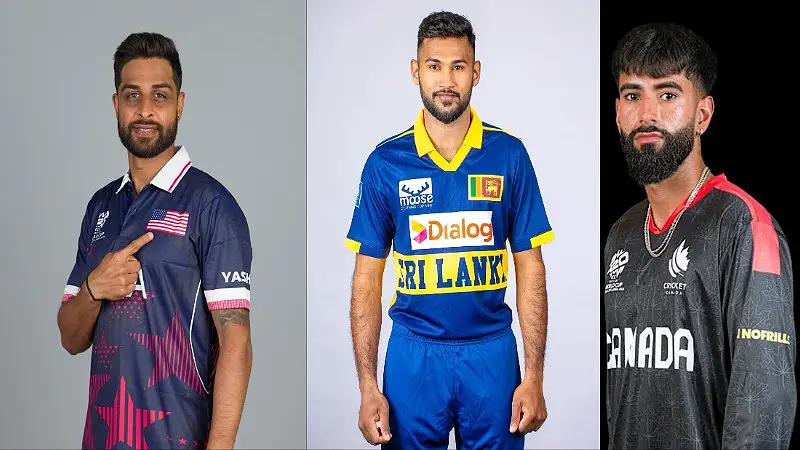

A Canadian left-hander scored 110 off 65 balls against New Zealand. An American all-rounder averaged above seventy with the bat while also bowling economically. A Sri Lankan middle-order batter accumulated 205 runs at a strike rate above 150. None of these players were household names before the tournament began. All of them will be discussed in cricket conversations for years after it ends. Five breakout performers whose campaigns said as much about where cricket is going as the champions who lifted the trophy.
Yuvraj Samra’s Century Against New Zealand
Canada’s Yuvraj Samra scored 110 off 65 balls against New Zealand, a century against a full-member nation that combined power hitting with genuine tactical intelligence. On slower surfaces where young batters frequently lose shape trying to accelerate, Samra paced his innings effectively, targeting shorter boundaries and rotating strike against spin before shifting into boundary mode in the final phase.
The composure he showed against high-quality pace and spin from a New Zealand attack that had reached the tournament’s knockout stage is the detail that separates this innings from a fortunate cameo. He read the match situation, adapted his tempo, and produced the century that associate-nation cricket needed someone to score.
Shubham Ranjane’s All-Round Value for the USA
Four matches, 141 runs, average above seventy, strike rate exceeding 180, plus economical overs with the ball. Shubham Ranjane gave the United States a player capable of influencing both innings in every match he played, the type of all-round contribution that allows captains to balance batting depth and bowling variety simultaneously.
His death-over acceleration was the most distinctive feature of his batting. In tight group-stage matches where the USA needed maximum runs from their final five overs, Ranjane provided the hitting that kept them competitive against more established sides. His bowling economy gave the USA an option that didn’t cost runs while the team built pressure from the other end.
Pavan Rathnayake’s 205 Runs for Sri Lanka
Pavan Rathnayake scored 205 runs at an average above thirty-four and a strike rate over 150, numbers that would represent a strong campaign for any established middle-order batter, let alone a player producing his first significant international tournament performances.
His unbeaten 28 against Australia illustrated what a modern T20 stabiliser looks like when the innings demands rebuilding rather than aggression. He handled spin effectively through the middle overs and shifted gears late, a combination that Sri Lanka’s limited-overs structure depends on finding in younger players to replace the experience that has gradually departed their batting lineup.
What the T20 World Cup 2026 Said About Associate Cricket
Mohammad Mohsin’s four wickets across four matches at an economy rate close to six, including 1 for 16 against India, and Louren Steenkamp’s 116 runs as Namibia’s leading scorer at a strike rate above 130, both reinforce the same point the other three players made more loudly. The gap between associate and full-member cricket is narrowing, and the T20 World Cup 2026 provided five specific case studies in what that narrowing looks like in competitive match situations.
Samra’s century, Ranjane’s all-round contributions, Rathnayake’s consistency, Mohsin’s disciplined spin, and Steenkamp’s technically sound opening play all came from players whose nations won’t appear in the later stages of future tournaments without significant development investment. But the individual performances suggest that investment, where it exists, is producing exactly the results the sport needs.
- Which of these five breakout players do you think has the highest ceiling in international cricket? Drop your pick in the comments and follow for cricket coverage.
FAQs
Who was the youngest standout player in the ICC Men’s T20WC 2026?
One of the youngest notable performers was Yuvraj Samra, whose century brought attention to Canada’s emerging batting talent.
Why are associate nation players important in the T20WC?
They broaden competition by introducing new styles and strategies, helping tournaments become more competitive and globally representative.
How did the Sri Lanka squad benefit from the tournament?
The Sri Lanka national cricket team gained confidence from emerging players such as Pavan Rathnayake, who strengthened their middle-order options.
Can emerging players from the T20WC become global stars?
Yes. Many cricketers who first impressed in World Cups later developed into regular international performers once they gained experience and exposure.