

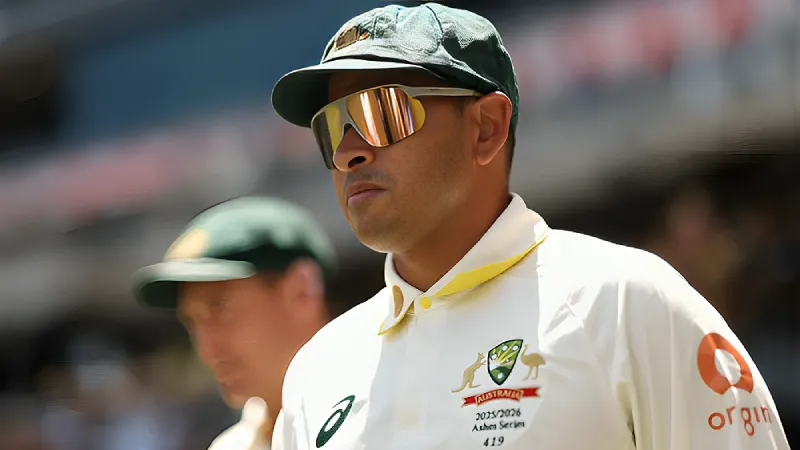

Test cricket loves its subtle chaos. One minute, you have a locked-in opener with years of equity, the next minute, a back spasm and a surprise partnership toss the entire hierarchy into a blender. That’s the Khawaja conundrum Australia faces heading into Adelaide.
Usman Khawaja has been Australia’s Test metronome for much of the post-2021 cycle, a calming force who averaged over 70 in the 2022–23 stretch. Yet since the 2023 Ashes, the graph has dipped 31.84 across 45 innings with only one century. Add an untimely injury, and suddenly a settled position looks negotiable.
Meanwhile, the Travis Head–Jake Weatherald experiment has done the one thing new combinations rarely do: work instantly. Partnerships of 75 and 77 aren’t world-beating, but they’re stable, fluent, and crucially winning.
So now Australia is 2–0 up, momentum humming, the batting rhythm smooth. And suddenly the question isn’t “When does Khawaja return?” but “Should he return as opener at all?”
Momentum Versus Legacy in Selection
Michael Clarke’s hesitation isn’t random punditry; it’s based on a long-observed truth in Australian cricket: senior batters often finish major cycles, not rebuild mid-series. He argues that Khawaja, at 37, might not be the automatic recall many assume. Australia is dominating, the opening stand is functioning, and nothing breaks a rhythm faster than tampering with the top. The bigger question: do you disrupt a working machine simply to restore hierarchy?
The Fresh Partnership That Changed Everything
Weatherald and Head weren’t even supposed to bat together at the top. Yet their two stands have brought a refreshing left-right dynamism. Head’s aggression paired with Weatherald’s clarity. It isn’t just the runs; it’s the tempo. They’ve consistently neutralized the new ball, allowing Australia’s middle order to attack instead of rebuild. When an accidental strategy starts becoming a winning pattern, selectors get nervous about touching it.
Khawaja’s Form Slide No Longer Invisible
Before the Perth injury, Khawaja’s place wasn’t questioned. But numbers don’t hide in Test cricket. Post-Ashes decline, fewer big innings, and a visible difficulty resetting after start-stop series have dragged him into scrutiny. At 37, selectors must evaluate whether this is a dip or the start of inevitability. That’s the uncomfortable part Clarke hints at: not all declines announce themselves loudly.
The Middle-Order Escape Hatch
Coach Andrew McDonald’s comment, “he does have flexibility,” is the strongest hint yet that Khawaja may not walk straight into his old job. Renshaw’s endorsement of Khawaja at No. 5 is grounded in data too: he averages 238 there (yes, boosted by that twin-century SCG miracle). With Head thriving up top, Khawaja’s path might shift sideways, not upward.
Returning to the Original Plan
Mike Hussey isn’t buying the one-innings theory. For him, long-term planning matters more than a brief purple patch. Khawaja was the designated Ashes opener, and one successful stand shouldn’t rewrite the blueprint. Hussey represents the traditionalist view: structural decisions shouldn’t be hijacked by temporary form spikes. It’s continuity versus opportunism, tradition versus situational logic.
There is no wrong choice, only a different shade of risk. Picking Khawaja protects experience; keeping Weatherald–Head protects momentum. And momentum has a louder voice in sport than people admit.
Whatever the selectors choose, one thing is clear: this isn’t about sentiment or reputation anymore. It’s about ensuring Australia’s dominance doesn’t turn into complacency.
Key Takeaway
Australia’s opening dilemma is no longer about injury recovery; it’s about whether stability or momentum matters more.
FAQs
1. What makes the current Head–Weatherald opening stand compelling?
Their starts have been quick, stable, and pressure-reducing, ideal for a dominant Test side.
2. Why is Khawaja’s spot under debate now?
His form has dipped since the 2023 Ashes, and injury opened the door for an in-form replacement.
3. How likely is Khawaja to return as an opener?
Selectors may still pick him there, but a move to No. 5 is now a realistic alternative.
Disclaimer: This blog post reflects the author’s personal insights and analysis. Readers are encouraged to consider the perspectives shared and draw their own conclusions.
Step into the world of cricket with JeetBuzz News—where expert opinions, trending Blogs, and behind-the-scenes insights meet all your favorite topics. Stay informed, stay entertained, and never miss the stories shaping the cricketing world—only on JeetBuzz News!