

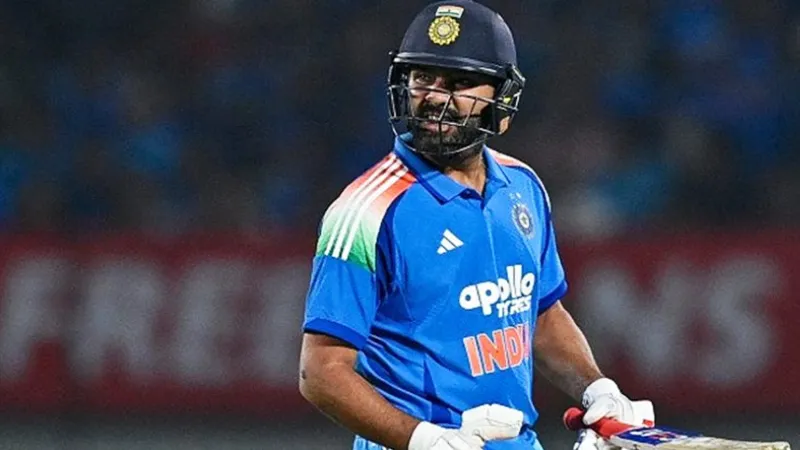

For a nation that treats its openers like sacred scripture, Rohit Sharma’s quiet ODI series against New Zealand felt almost unsettling. Three matches. Sixty-one runs. An average barely scraping past 20. On paper, it read like a decline. On social media, it read like prophecy.
India lost the series 1–2 despite winning the opener, and Rohit’s numbers strike rate of 76.25, no score beyond 30 became Exhibit A in a familiar debate: Is time finally catching up with the Hitman? Yet here’s the irony. Even after that series, Rohit remains inside the ICC’s top three ODI batters. Even at 38. Even after retirement from Tests. Cricket, as it often does, tempts us to confuse short-term discomfort with long-term danger.
A Cold Patch After Scorching Heat
If Rohit’s New Zealand series had followed months of mediocrity, concern would be justified. But context is everything, and his recent ODI trial has been anything but barren.
Just weeks before in Australia (October 2025), Rohit had been on one of his “reminder tours” with 202 runs scored in three ODIs for an average of over 100, including a fifty and a century. He had won Player of the Series to boot as well, which is a relatively unusual achievement given that India lost the series 1-2; however, it did go to show just how dominating he was individually.
Then came South Africa. Two half-centuries in three ODIs. Controlled aggression. Classic tempo management. No signs of erosion. Even domestically, he walked into the Vijay Hazare Trophy and casually dismantled Sikkim with a blistering 155. That’s not the resume of a man fading; that’s a batter who momentarily mistimed his peak.
A Career Built on Surviving Slumps
Rohit Sharma’s greatest ODI skill isn’t the pull shot or the double-hundred obsession; it’s survival through cycles. His career is practically a case study in delayed dominance. Remember this: he averaged under 20 across his first three ODI seasons. In 2012, he endured 14 ODIs at an average below 13, which would bury most modern batters under think-pieces. What followed? A 2013 renaissance where he averaged 52 and redefined his role.
Again in 2021, a modest three-match stretch averaging 30 sparked whispers. The response? A 2022 season averaging 41.50, packed with impact innings. Rohit doesn’t dodge rough phases; he absorbs them. History shows that when his numbers dip briefly, they often rebound violently. Betting against that pattern now isn’t analysis; it’s amnesia.
Starts Were There, Conversions Weren’t
There’s a crucial distinction cricket often ignores: being out of form versus being out of runs. Against New Zealand, Rohit was firmly in the second category.
He reached double figures in all three innings. Crossed 20 twice. Looked settled at the crease. No tentative footwork. No panicked pokes outside off. His dismissals came while accelerating, not while surviving.
Even Shubman Gill acknowledged it post-series, noting that Rohit’s issue wasn’t rhythm, but conversion. The Hitman wasn’t searching for timing; he was pushing gears and misfiring the final shift.
Experience as the Ultimate Insurance
Cricket is often very unkind to veteran players, but occasionally that just stops cold. Sachin Tendulkar experienced low scoring during bilateral series for years before the 2011 World Cup. MS Dhoni’s ODI batting average was at its lowest level of his career before his 2013 resurgence. Kumar Sangakkara also experienced long periods with little success during bilateral play near the end of his international career, but dominated tournament cricket throughout.
Rohit belongs in that lineage. Players with thousands of runs don’t forget batting; they recalibrate. And in ODI cricket, where tempo matters more than tempo myths, Rohit’s understanding of innings construction remains elite.
Key Takeaway
Rohit Sharma didn’t lose form against New Zealand; he simply ran out of runs.
FAQs
- What went wrong for Rohit Sharma against New Zealand?
He got starts but failed to convert them while accelerating.
- Why shouldn’t India worry about his ODI future?
His recent form, historical bounce-backs, and technical fluency remain intact.
- How likely is a Rohit comeback in the upcoming ODIs?
Extremely, history suggests lean patches are usually followed by dominant returns.
Disclaimer: This blog post reflects the author’s personal insights and analysis. Readers are encouraged to consider the perspectives shared and draw their own conclusions.
Step into the world of cricket with JeetBuzz News—where expert opinions, trending Blogs, and behind-the-scenes insights meet all your favorite topics. Stay informed, stay entertained, and never miss the stories shaping the cricketing world—only on JeetBuzz News!