

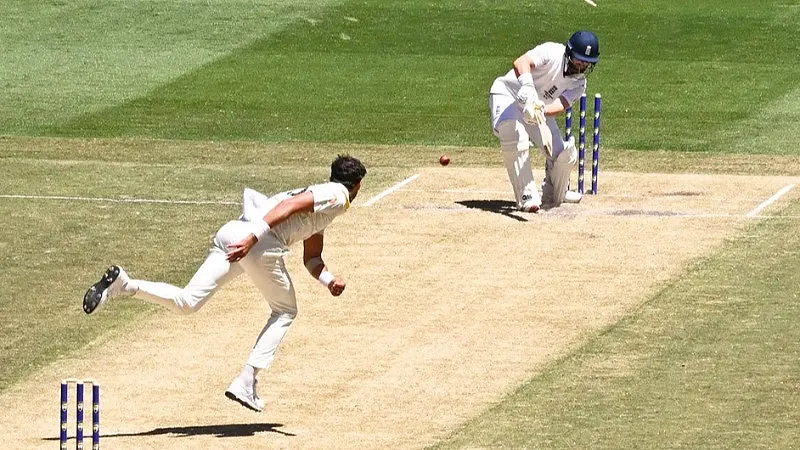

Test cricket is based upon contradictions. On the one hand, we celebrate epic battles of endurance lasting for five days; on the other hand, we cheer with excitement as a game ignites and comes to an end by lunchtime on day two of the battle. The fourth Ashes test played at the Melbourne Cricket Ground existed firmly in those contradictions. Officially, this was a thriller; practically, it was a flash.
When Wickets Become the Only Metric
Pitch producing help for bowlers isn’t a crime. Australia built its legacy on it. But 36 wickets in one day, followed by a Test completed inside two days, pushes the debate beyond “lively surface” into “functional imbalance.”
The most telling detail? Not a single over of spin was bowled in the match. At the MCG. Traditionally, a ground where wear and footmarks at least invite spinners into the narrative by Day 4. When seam dominates so completely that spin becomes redundant, something structural, not tactical, is at play.
Entertainment vs Examination Cricket
Michael Vaughan’s discomfort captures modern Test cricket’s identity crisis. Yes, the crowd went home entertained. But Test cricket isn’t T20 with longer breaks. Its value lies in problem-solving, over time adjustment, patience, and survival.
When batting becomes a lottery, technique stops being examined and starts being punished indiscriminately. That’s not “classic pace bowling.” That’s accelerated randomness.
The Rating System’s Quiet Inconsistency
Here’s where the unease sharpens. The two-day Perth Test earlier in the series was rated ‘very good’. Now Melbourne joins the same club: short match, extreme assistance, minimal batting rhythm. Historically, ICC pitch ratings were designed to flag extremes, not celebrate them selectively.
If duration alone doesn’t matter, then neither should geography. But evidence suggests otherwise.
Sunil Gavaskar and the Art of Sarcastic Truth
Gavaskar didn’t shout; he smirked. By comparing Melbourne with Perth, he exposed how pitch ratings feel elastic when Australia hosts. His biting line about “dropping the word ‘very’ from ‘very good’” underlines the absurdity of 32 wickets. Excellent. 36 wickets? Still good.
His deeper point cuts harder: when India produces spinning tracks, demerit points arrive faster than swing under clouds.
Michael Vaughan’s Balance Alarm
Vaughan accepted the entertainment but rejected the fairness. His argument isn’t anti-bowling, it’s pro-contest. When pitches “do too much,” batting ceases to be a skill battle and becomes a survival drill. For a former opener, that’s not nostalgia talking; it’s professional realism.
Geoffrey Boycott’s Blunt Accountability Test
Boycott went straight for the curator. Too much grass. Too little margin. His critique wasn’t poetic; it was procedural. A five-day Test pitch, he argued, must allow batters to settle. When seamers just hit a length and wait, preparation has failed.
Ravichandran Ashwin’s Conditional Neutrality
Ashwin took the most nuanced stance. He didn’t condemn the pitch; he condemned the conversation around it. Equal conditions for both teams? Fine. Unequal judgment across countries? Not fine. His comparison with Eden Gardens and India–South Africa surfaces reframed the issue as cultural bias, not cricketing philosophy.
Aakash Chopra and the Spin Silence
Chopra raised the most uncomfortable stat of all: zero overs of spin. In India, a pitch where pacers don’t bowl draws outrage. In Australia, a pitch where spinners don’t exist draws praise. His “death of Test cricket” comparison, Ahmedabad vs Melbourne, exposed how narratives shift depending on longitude.
Key Takeaway
Short Tests aren’t the problem; selective judgment is.
FAQs
- What made the MCG pitch controversial?
The match ended in two days with extreme seam movement and zero overs of spin.
- Why are experts calling out double standards?
Similar short Tests abroad are praised, while subcontinental pitches face penalties.
- How does this affect Test cricket’s future?
Inconsistent pitch evaluation risks eroding trust in the format’s fairness.
Disclaimer: This blog post reflects the author’s personal insights and analysis. Readers are encouraged to consider the perspectives shared and draw their own conclusions.
Step into the world of cricket with JeetBuzz News—where expert opinions, trending Blogs, and behind-the-scenes insights meet all your favorite topics. Stay informed, stay entertained, and never miss the stories shaping the cricketing world—only on JeetBuzz News!