

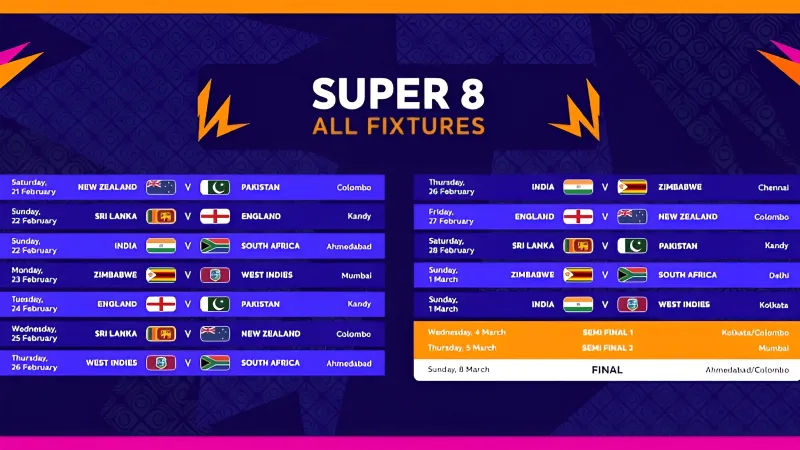

The T20WC 2026 Super 8 format divides the eight qualified teams into two Super 8 groups of four, where each side plays the others once, and the top two advance to the semifinals. This stage determines knockout qualification through points standings rather than cross-group play. India, Sri Lanka, and the other qualifiers enter based on group-stage positions and ICC seedings. The format also defines Super 8 venues, scheduling balance, and how Super 8 qualification works, making it the decisive phase before the semifinals.
Super 8 Group Structure
The Super 8 groups consist of two pools of four teams each. Every team plays three matches within its group, meaning no cross-group fixtures. The top two teams from each group move into the semifinals, while the remaining four are eliminated.
This structure keeps qualification straightforward: total points decide standings, with net run rate acting as a tie-breaker if required. Because there are only three games per team, one defeat can significantly affect semifinal chances. In short tournaments, the margin of victory becomes strategically important.
How Super 8 Qualification Works
Super 8 qualification works through a simple carry-forward model from the group stage. Teams advance based on finishing positions, and pre-tournament ICC seeding determines placement within the two groups.
This explains why group winners can land in the same Super 8 group. The seeding system is fixed before the tournament begins, ensuring commercial balance and scheduling predictability. Once in the Super 8, previous points do not carry forward. Every team starts at the same level, and qualification depends entirely on performance across three matches.
India Super 8 Schedule
India’s Super 8 schedule places them in high-pressure prime-time fixtures across major venues. As defending champions and co-hosts, India play three matches against group rivals, including Sri Lanka’s group counterpart and other top-performing sides.
From a tactical perspective, venue conditions matter. Ahmedabad generally offers true bounce, Chennai can assist spin under lights, and Kolkata has historically supported stroke play. Managing pitch conditions, travel, and recovery between games becomes crucial because the condensed format leaves little room for experimentation.
T20 World Cup 2026 Super 8 Venues and Conditions
The Super 8 venues are spread across India and Sri Lanka, creating varied playing environments. Colombo and Pallekele typically offer humidity and grip for slower bowlers, while Indian surfaces may range from batting-friendly to spin-assisting depending on preparation.
These contrasting conditions influence team selection. Squads with versatile bowling attacks gain an advantage. Day-night scheduling, including double-headers, also affects dew impact in evening matches, which can tilt toss decisions. Tactical adaptability across venues is essential under the T20 World Cup 2026 Super 8 format.
High-Stakes Semifinal Path
With only three matches per team, the margin for error is minimal. A team that wins two games generally stays in contention, while one loss combined with a poor net run rate can create qualification pressure.
Historically, short second-round formats in ICC events have produced tight finishes. Because only two from each Super 8 group advance, even dominant group-stage teams cannot afford complacency. Momentum resets at this stage, making adaptability and execution more important than prior results.
The T20WC 2026 Super 8 format is designed to create high-intensity, short-league competition where every match directly shapes semifinal qualification. Two groups of four, three matches per team, and points-based advancement mean there is no safety net once this stage begins. Venue diversity across India and Sri Lanka adds tactical complexity, particularly regarding spin conditions and dew factors.
Key Takeaway
The Super 8 stage is a three-match sprint where structure, seeding, and conditions combine to decide semifinal fate.
FAQs
How many teams qualify for the Super 8 in the T20WC 2026?
Eight teams advance from the group stage into two Super 8 groups of four.
How does the net run rate affect Super 8 qualification?
If teams finish level on points, net run rate is used as the primary tie-breaker.
Which cities are hosting Super 8 venues?
Matches are being played across major grounds in India and Sri Lanka, including Colombo and key Indian stadiums.
Can a team qualify for the semifinals with two wins in the Super 8?
Two wins usually keep a team strongly in contention, but net run rate may still decide final standings.
Is India’s Super 8 schedule tougher than that of other teams?
The difficulty depends on opposition form and venue conditions rather than schedule order alone.
Disclaimer: This blog post reflects the author’s personal insights and analysis. Readers are encouraged to consider the perspectives shared and draw their own conclusions.