

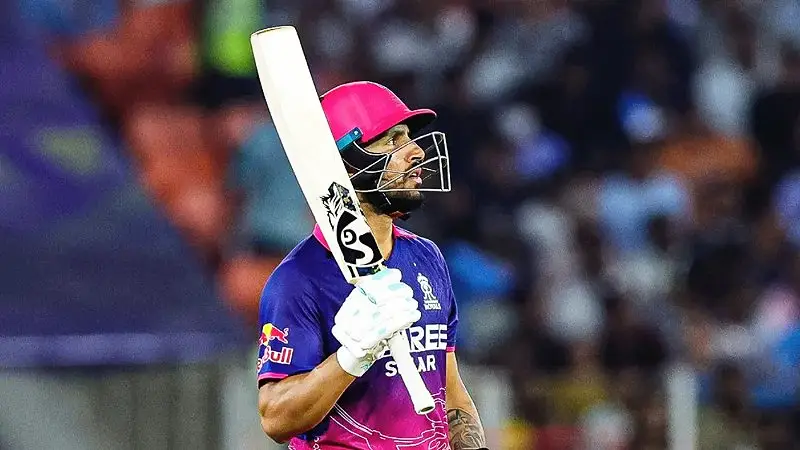

75 off 42 balls against the Gujarat Titans. The scorecard shows an excellent innings, and most match reviews stop there. They shouldn’t. Dhruv Jurel’s contribution to Rajasthan Royals’ win included identifying which boundary to target against which bowler on Ahmedabad’s asymmetric surface, suggesting the tactical plan that used googlies specifically against left-handers to force risky aerial shots, and recommending that Jofra Archer bowl the 19th over rather than being held for the 20th, a decision that changed the pressure equation in the closing overs. The 75 was the visible contribution. The tactical intelligence surrounding it was the complete picture of why RR won that match.
Number Three Was Always His Position
Promoting Jurel to number three fundamentally changes how the Rajasthan Royals construct their innings rather than just changing the batting order aesthetically. The specific function he covers at three, absorbing early pressure intelligently before accelerating once he has read the conditions, is the function that allows Shimron Hetmyer’s finishing role to operate from a position of strength rather than necessity. When Jurel bats at three and produces 40-plus from 25 balls in the middle overs, Hetmyer arrives at six with the innings in a dominant position. When Jurel isn’t at three or doesn’t fire, Hetmyer arrives in a rescue situation. The difference between those two match states is the difference between 185 and 165.
Controlled Aggression Made the 75 Devastating
The specific quality of Jurel’s innings against GT wasn’t the boundary count; it was the timing of the acceleration within it. He allowed Yashasvi Jaiswal to dominate the powerplay while gathering information about the pitch, the bowling plans, and the boundary dimensions. Ahmedabad’s longer boundary on one side meant certain shots that produce sixes at other venues produce catches at this one. Jurel identified which boundary was shorter early in his innings and targeted it consistently. The fours and sixes in his 75 came predominantly to the straight and shorter boundary rather than across the line into the longer one.
IPL 2026 Revealed Jurel’s Tactical Intelligence
The specific tactical contribution that has been revealed about Jurel goes beyond batting; it’s his bowling involvement alongside Ravi Bishnoi that shows a cricketer who processes the game at a level beyond his experience suggests. His identification that googlies bowled to left-handers on a specific line would tempt the aerial shot to the longer boundary wasn’t a lucky observation. It was a pre-match or mid-innings read of how that surface and those dimensions interact with left-hand batter trigger movements. The dismissals that followed confirmed the analysis was correct. A young wicketkeeper-batter contributing bowling plan intelligence in real-time during a match is the specific attribute that makes Jurel categorically more valuable than his runs-per-innings average indicates.
Why RR Found a Complete Cricketer
The specific evolution Jurel is undergoing within RR’s setup is the development from talented keeper-batter to genuine match-intelligence contributor. Wicketkeeper-batters who understand captaincy, bowling plans, and match-situation tactics become disproportionately valuable in T20 cricket because they see the game from the captain’s perspective while positioned behind the stumps, where every delivery’s tactical implications are visible. Jurel, at number three with this level of tactical involvement, gives RR a player who contributes runs in the batting phase and leadership intelligence in the fielding phase without occupying a specialist slot for either function. That combination, high batting value plus tactical contribution from the same player, is exactly what complete T20 cricketers look like.
Does Jurel continue developing into the complete tactical cricketer his GT performance suggested, or does IPL reveal the ceiling of what he can contribute beyond the exceptional innings that made everyone take notice? Drop your take and follow for IPL updates.
FAQs
What made Dhruv Jurel’s IPL 2026 performance special?
It combined a high-impact innings with tactical inputs that influenced bowling and captaincy decisions.
Why is Jurel batting at No 3 for Rajasthan Royals?
The move provides stability in the middle overs while allowing finishers to play more defined roles.
How did the GT vs RR conditions affect Jurel’s innings?
Ahmedabad’s boundary sizes and pitch behavior required controlled shot selection, which he executed well.
Can Jurel become a regular finisher in the Indian Premier League?
His adaptability suggests he can play multiple roles, including finishing, depending on team needs.