

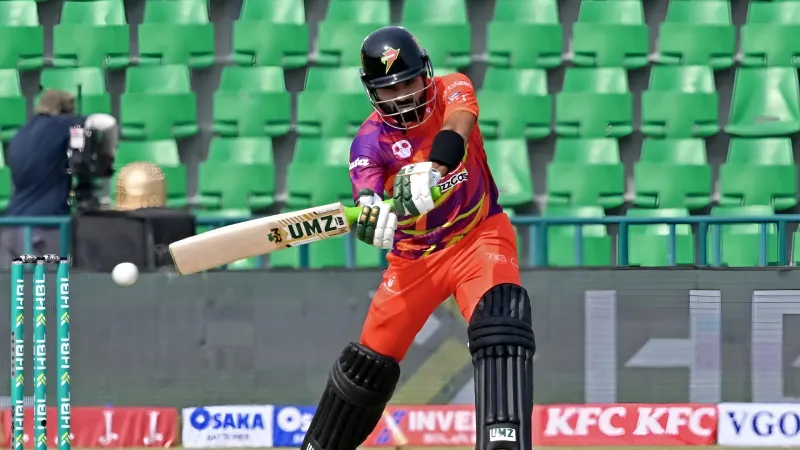

Mohammad Rizwan built one of the most remarkable T20 batting records in Pakistan cricket on a single foundation: anchor first, accelerate later. It worked for years because the formula was reliable enough to produce totals and reliable enough to win matches. What’s happening in this PSL campaign is something more uncomfortable than a form slump. The modern T20 game has moved in a direction that specifically punishes the approach Rizwan has always used, and the league’s most decorated batter is finding that his greatest strength has become the thing opponents plan around most confidently.
The Powerplay Problem Gets Worse
The first six overs used to be where Rizwan established control and let a partner take risks. That formula required someone at the other end willing to attack, and a pitch that rewarded patience early. Neither condition is being consistently met for Rawalpindi this season.
When a partnership produces ones and twos through the power play without boundary acceleration, fielding sides don’t panic. They set fields calmly, dry up the scoring, and wait. The pressure accumulates at the other end of the innings instead, where the required run rate has already climbed beyond what any finisher can realistically manage across four overs.
PSL 2026 Strike Rate Reality Check
The shift in how PSL 2026 is being played has been rapid enough that even strong performers from previous seasons are being left behind if they haven’t adjusted. Rizwan hasn’t adjusted. His numbers place him among the slower-scoring openers in the league during the phases where acceleration is now considered a baseline expectation rather than a bonus.
Modern T20 cricket no longer treats the anchor as a neutral presence who scores at a run-a-ball and lets others take risks. Anchors in the current game are expected to maintain 130 to 140 minimum while accumulating, then shift gears decisively once set. The gap between that expectation and what Rizwan has delivered this season is visible not just in strike rate figures but in how Rawalpindi’s innings are shaped.
Rawalpindi’s Squad Makes It Worse
The structural problem extends beyond Rizwan alone, but his influence over how the team is built and how they play makes him central to it. Rawalpindi doesn’t have a natural power hitter at the top who can compensate for a slower accumulating partner. Without that balance, the anchor role amplifies every problem in the lineup rather than solving any of them.
Middle order batters who walk in during overs 8 to 12, facing a required rate that’s already climbing, need a platform, not a recovery project. When the opening partnership produces modest totals at a modest pace, the middle order is in damage limitation mode before they’ve faced a ball. Rawalpindi’s squad construction has leaned toward the same cautious identity that Rizwan’s batting reflects, and the result is a team with no phase where they’re naturally aggressive enough to threaten a well-set bowling attack.
Captaincy Under Pressure Is Cracking
Leading a struggling side requires the kind of tactical flexibility that proactive captains use to offset squad limitations. Field placements that take risks to create pressure. Bowling changes that go against instinct because the situation demands it. Matchup decisions that acknowledge the game state rather than stick to a pre-planned script.
Rizwan’s captaincy has trended toward the conservative in exactly the moments where boldness was needed. It’s not that his tactical reading is poor. It’s the same temperament that produces a measured batting approach, produces measured captaincy decisions, and measured captaincy in a losing run becomes a cycle. Each conservative call that doesn’t work makes the next one slightly harder to justify, and the team’s body language starts reflecting a leadership group that’s managing results rather than chasing them. Injuries and toss disadvantages have contributed. Elite captains absorb those setbacks. The version of Rizwan leading Rawalpindi this season hasn’t found a way to do that yet.
- Can Rizwan reinvent his T20 approach mid-tournament, or has PSL already passed him by? Drop your take in the comments and follow for PSL updates.
FAQs
Why is Mohammad Rizwan struggling in PSL recently?
His slower strike rate and conservative approach do not align with modern T20 scoring demands.
Is Mohammad Rizwan still a good T20 player?
He remains technically strong, but his effectiveness depends on adapting to a faster scoring style.
How has Rawalpindi performed in PSL?
Rawalpindi has struggled due to poor starts, inconsistent batting, and squad imbalance.
Can Rizwan improve his strike rate in T20 cricket?
Yes, but it requires an intent shift, especially during the power play and middle overs.
Which teams benefit most from aggressive power-play batting in PSL?
Teams with explosive openers tend to dominate early overs and control match momentum more effectively.
Disclaimer: This blog post reflects the author’s personal insights and analysis. Readers are encouraged to consider the perspectives shared and draw their own conclusions.