

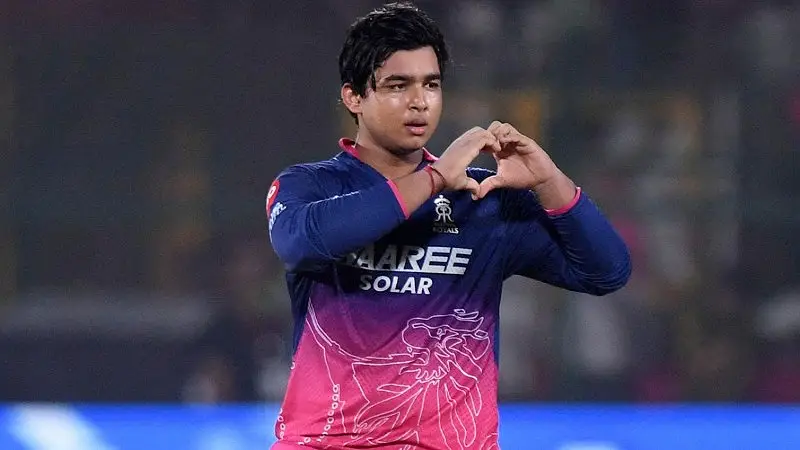

Sooryavanshi didn’t rise to professional cricket through elite academies or metro infrastructure. He rose through repetition, family sacrifice, and a coaching process built around his limitations before it addressed his strengths. His journey from Samastipur to the IPL is less about natural talent arriving at the right place and more about a deliberate development model that worked without the resources most professional cricketers take for granted. That distinction matters because it makes the blueprint replicable.
Daily Travel Built the Foundation
The earliest phase of his development wasn’t spent in a training centre. It was spent on the road between Samastipur and Patna. Regular travel to access competitive training environments created a discipline structure before any formal coaching began. The physical routine of commuting daily for practice builds a different kind of mental consistency from simply showing up when sessions are scheduled.
His father’s financial and logistical commitment ran parallel to every session. Managing travel costs and maintaining the routine without institutional support requires a sacrifice that most cricketing development stories gloss over. What it produced wasn’t just fitness or match exposure. It produced the mental endurance that separates players who perform when conditions are easy from those who perform when nothing is. That quality comes from years of doing the hard part first, not from a coaching manual.
Coach Manish Ojha Built the Technique
Under coach Manish Ojha, Vaibhav Sooryavanshi’s training shifted from raw aggression to structured skill development. The emphasis fell on fundamentals: footwork positioning, shot selection against specific lengths, and balance at the point of contact rather than at the completion of the shot.
The most significant technical tool in this phase was the Robo Arm, which introduced controlled pace variation at speeds between 130 and 135 km/h. Most young batters at his developmental stage weren’t facing deliveries at that pace in training. The adaptation force was specifically about reaction time, getting the bat face in the correct position before the body’s natural instinct could interfere. By the time Vaibhav encountered those speeds in match conditions, they were already familiar problems with practiced solutions.
Aggression With Awareness Separated Him
One aspect of Vaibhav Sooryavanshi’s development that stands out is the combination of attacking instinct with situational clarity. Training drills included wet surface conditions, variable bounce, and dual new-ball scenarios specifically designed to test decision-making under pressure rather than shot execution in ideal conditions.
What those drills revealed was that his boundary hitting wasn’t impulse-driven. He assessed the ball first and attacked second, which is harder to build in young players than pure aggression. Most junior batters hit hard on instinct. Vaibhav’s pattern suggested he was hitting hard after processing. Scoring 118 against experienced academy bowlers and 101 off 38 balls against professional opposition before full state-level exposure confirmed this wasn’t a training habit. It was a match temperament.
Vaibhav Sooryavanshi Mirrors Dhoni and Pant
The small-town to elite cricket pathway has produced MS Dhoni and Rishabh Pant before him. Dhoni’s rise from Ranchi and Pant’s evolution through Delhi’s domestic system both followed the same pattern: infrastructure limitations compensated by high-volume repetitive practice and mental conditioning that metro-based systems don’t prioritize in the same way.
What defined Dhoni’s early development wasn’t access. It was adaptability and the absence of shortcuts. Pant’s aggression was shaped by conditions that forced him to score on difficult surfaces rather than flat ones. Vaibhav’s trajectory mirrors both: significant performances under pressure, on pitches that tested shot selection rather than rewarded it. That pattern is the outcome of a training philosophy built around adversity first.
Bihar’s grassroots cricket doesn’t have the pipeline that Tamil Nadu, Mumbai, or Karnataka offers. What this journey demonstrates is that the pipeline matters less than the process running through it. A disciplined, pressure-tested process produces IPL-ready output without the structural advantages established systems provide.
- Is Sooryavanshi’s rise from Bihar’s grassroots cricket proof that the IPL pathway no longer belongs only to metro systems, or does his journey still depend on individual exceptions rather than structural change? Drop your pick in the comments and follow for cricket updates.
FAQs
Q: Who is Sooryavanshi and where is he from?
He is a young, aggressive batter from Samastipur, Bihar, who rose through grassroots cricket to the IPL.
Q: How did Sooryavanshi develop his batting so young?
Coach Manish Ojha’s Patna sessions with Robo Arm pace exposure built his reaction time and technique early.
Q: What is Sooryavanshi’s best score in competitive cricket?
He scored 101 off 38 balls against professional opposition before reaching state-level competition.
Q: Why is Sooryavanshi compared to MS Dhoni and Rishabh Pant?
All three rose from non-metro backgrounds through high-volume practice and adaptability rather than elite academy access.
Q: Can Bihar cricketers reach the IPL without Metro Academy support?
Yes, Vaibhav’s journey proves disciplined process and competitive exposure can replace institutional infrastructure.