

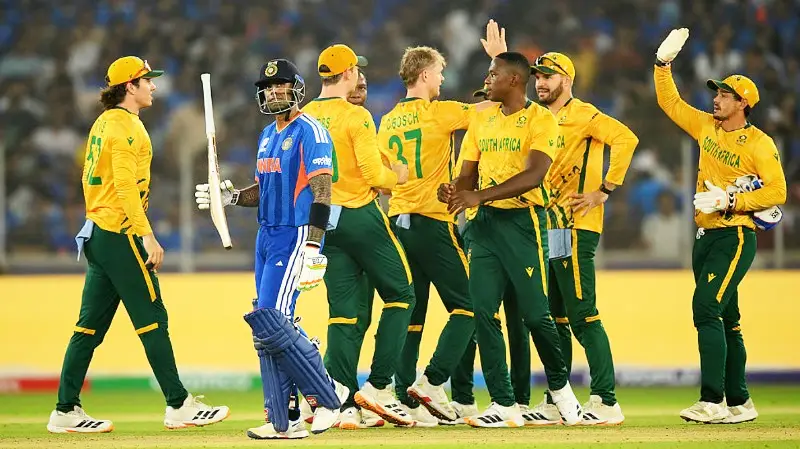

South Africa’s dominance in the T20WC is being driven by one clear factor: their pace attack combination has been the most adaptable and reliable bowling unit in the competition. Led by Kagiso Rabada, supported by Lungi Ngidi and the emerging Corbin Bosch, South Africa has consistently controlled games across varying conditions. From the West Indies vs South Africa Super Eight clash to slower surfaces in India, their seamers have dictated tempo, neutralised power hitters, and closed out matches with precision.
Pace Adaptability Across T20 World Cup Conditions
South Africa’s biggest edge has been its ability to adjust pace and length to surface behavior. On harder pitches like Ahmedabad, the attack leaned into bounce and hard lengths; as surfaces slowed, cutters and off-pace deliveries became primary weapons. This flexibility ensured the South Africa pace attack T20 WC strategy never relied on one-dimensional speed. Against the West Indies, early pace-on bowling extracted bounce, while later overs featured slower balls and yorkers as the pitch settled.
Rabada’s Pressure Beyond Wickets
While wicket tallies don’t always reflect impact, Kagiso Rabada’s influence has been decisive. Even in matches where he went wicketless, his powerplay spells restricted scoring and forced risky shots at the other end. That pressure-building role has been vital, particularly against stronger batting lineups. His bounce and seam movement have consistently shaped innings, even when the scoreboard doesn’t highlight it.
Ngidi and Bosch at the Death
Few teams possess two reliable death-over options, but South Africa does. Lungi Ngidi’s slower-ball variations have repeatedly disrupted set batters, while Corbin Bosch’s accuracy at yorker length has limited late surges. In the West Indies vs South Africa contest, the pair conceded minimal runs in the final overs, underlining why the South Africa pace attack unit has become so difficult to counter once teams enter the final phase.
Match Control Through Data Trends
Without overreliance on raw speed, South Africa’s seamers have maintained low economy rates across phases. Their death-over economy has ranked among the best in the tournament, and they’ve consistently reduced boundary percentage in the final five overs. Rather than chasing wickets recklessly, the attack prioritises containment, a data-backed approach that has translated into wins across venues.
A Rare South African Blueprint
South Africa has entered World Cups with strong individual quicks but limited tactical cohesion. This unit feels different. Compared to previous tournaments like 2016 or 2021, the current T20 World Cup attack shows clearer role definition and situational planning. Similar to how elite bowling units evolve, this group mirrors successful tournament-winning sides that rely on adaptability rather than raw pace alone, adding credibility to their title push.
The South Africa pace attack’s success is no coincidence. Through intelligent use of conditions, clear bowling roles, and disciplined execution, South Africa has built a seam unit capable of winning matches in multiple ways. With Rabada setting the tone, Ngidi controlling the death, and Bosch emerging as a dependable enforcer, their bowling blueprint looks tournament-ready. If conditions continue to vary as expected in the knockout stages, this adaptability gives South Africa a genuine edge to go deep and possibly lift the trophy.
Key Takeaway
South Africa’s T20WC surge is built on a pace attack that adapts faster than any batting lineup can adjust.
FAQs
How important is Kagiso Rabada to South Africa’s T20WC campaign?
Rabada sets the tone with early pressure, even when he isn’t taking wickets, shaping innings from the powerplay.
Why is Lungi Ngidi effective in death overs?
His slower-ball control and pace disguise make it difficult for batters to line him up late in the innings.
Can Corbin Bosch be trusted in high-pressure matches?
So far, his accuracy and discipline suggest he can handle pressure, especially on slower surfaces.
What makes South Africa’s pace attack different from other teams?
Their adaptability to conditions and clearly defined bowling roles separate them from pace-heavy but rigid attacks.
Is South Africa’s bowling stronger than their batting in this World Cup?
At this stage, yes, their bowling has been the more consistent match-winning factor.