

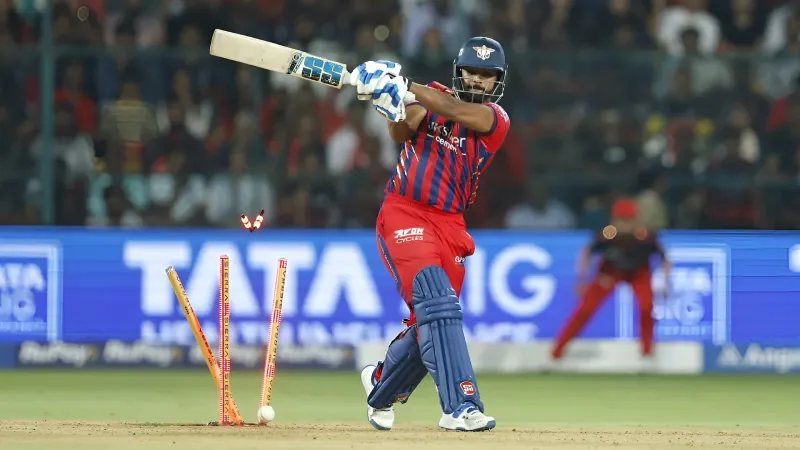

The argument isn’t complicated. Nicholas Pooran is one of the most destructive T20 batters in the world. He destroys spin. He accelerates against pace. He changes match situations within three or four overs of taking guard. LSG have all of that available and keep sending him out when the game is already partially decided, the powerplay is done, and the required rate has climbed beyond where his natural rhythm can take control. That isn’t a selection decision. It’s a tactical waste that LSG cannot afford to keep repeating.
Pooran Thrives Early Not Late
Pooran‘s game is built for the transition phase between the powerplay and the middle overs. He reads spin quickly, picks length early against pace, and doesn’t need ten balls to find his timing. Those are precisely the qualities that make a No.3 batter dangerous rather than just functional.
At No.5, none of that matters. He arrives after the 12th over, faces a field set for defence, and gets four or five overs to produce runs the team already needed six overs ago. The result is forced aggression rather than natural acceleration, and forced aggression from Pooran produces the same dismissals it produces from any batter mistimed pulls, misjudged slog sweeps, and an average that no longer reflects his actual ability.
LSG Top Order Creates Tactical Gaps
Mitchell Marsh’s aggressive intent at the top and Aiden Markram‘s consistency provide LSG with a strong foundation. That’s not the problem. The problem is what happens between the powerplay ending and the death overs beginning.
When Pooran bats at No.5, LSG’s overs 7 to 14 are handled by batters who aren’t equipped to attack spin with the same authority he brings. Opposition captains recognise that window. They hold their best spinners back, bowl tight through those overs, and concede the powerplay knowing they can strangle the phase where LSG are weakest. Promoting Pooran closes that window entirely and forces bowling attacks to adjust their plans from the moment he walks to the crease.
IPL 2026 Middle Overs Decide Games
Teams that dominate overs 7 to 15 consistently post bigger totals and defend them more comfortably. That’s the pattern across 2026, and LSG’s results reflect what happens when those overs go to waste.
Pooran against spin in that phase is as close to a guaranteed advantage as T20 batting gets. His ability to attack orthodox left-arm spin, pick the googly early, and hit against the turn on slower surfaces gives LSG a matchup advantage most sides cannot replicate. Keeping him in the dugout during those overs and unleashing him at No.5 when the pitch is at its slowest, and the field is up isn’t protecting him. It’s neutralising him.
No.3 Fixes the Whole Problem
Promoting Pooran to No.3 doesn’t disrupt LSG’s structure. It completes it. Marsh attacks in the power play. Pooran controls and accelerates through the middle. Markram and the lower order close the innings out. That’s a batting lineup with a defined role for every phase and a match-winner operating at the exact point where match-winners do the most damage.
The longer LSG delays this decision, the more matches they lose in the phase they should be winning. Pooran hasn’t declined. His position has just been wrong. Fix the position, and the problem fixes itself.
- Should LSG move Nicholas Pooran to No.3 immediately, or does Mitchell Marsh’s form at the top make the current order impossible to change mid-tournament? Drop your pick in the comments and follow for IPL updates.
FAQs
Q1: What is the best batting position for Nicholas Pooran in T20?
No.3, where he can attack spin through the middle overs and face enough deliveries to control the innings.
Q2: Why is Pooran underperforming for LSG in IPL 2026?
Batting too low forces him into immediate acceleration without rhythm, which limits his natural game.
Q3: How does batting order affect LSG’s middle overs strategy?
Misplacing Pooran leaves overs 7 to 15 without a genuine spin attacker, which opposition captains exploit directly.
Q4: Can LSG fix their batting balance without changing their top two?
Yes. Promoting Pooran to No.3 behind Marsh and Markram strengthens the middle without disrupting the powerplay setup.
Disclaimer: This blog post reflects the author’s personal insights and analysis. Readers are encouraged to consider the perspectives shared and draw their own conclusions.