

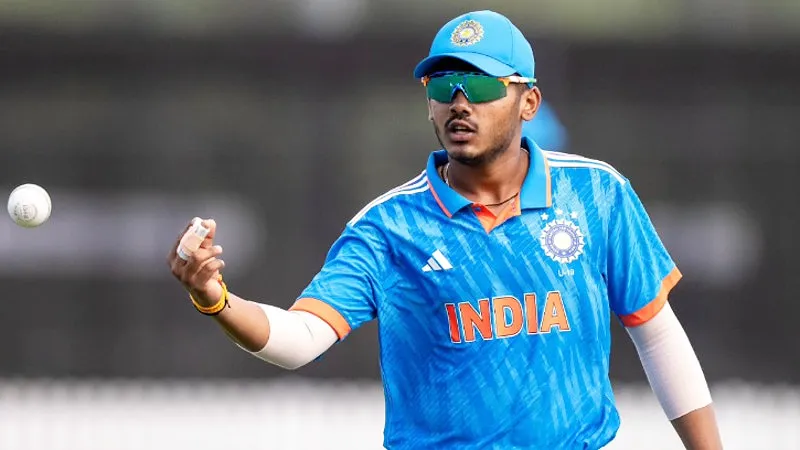

India’s under-19 cricket team doesn’t go into a World Cup looking for a chance to redeem itself but rather with expectations of winning. It is this that makes the road to the 2026 U19 ODI World Cup so much more difficult than it would normally be. The two final losses in a row, the loss to Australia at the 2024 U19 World Cup and the loss to Pakistan at the 2025 U19 Asia Cup, have quietly shifted the dialogue of India’s U19 Cricket Team.
The youngest and most skilled of the Chennai Super Kings’ youngsters, Ayush Mhatre, has been named the leader of the team for the upcoming 2026 season. Almost 20 years old and therefore nearly at the prime of his career, he will be in charge of creating the on-field plans for his teammates, as well as the psychological burden of regaining India’s place atop the youth cricket world. A mix of old academy players (such as Vaibhav Sooryavanshi and Vihaan Malhotra) and those who are developing from their own experiences in the IPL are all part of the new CSK squad.
Leadership Built on Early Franchise Exposure
Mhatre’s captaincy isn’t accidental. CSK’s system has long prized temperament over flair, and Mhatre reflects that lineage. His elevation signals BCCI’s belief that leadership now begins earlier, forged in IPL dugouts, not just junior camps. With Vihaan Malhotra (RCB) as vice-captain, this is arguably India’s most franchise-influenced U19 leadership duo yet.
Group B Is No Soft Launch
Starting against the USA in Bulawayo (Jan 15) looks comfortable on paper, but the real examination lies ahead. Bangladesh’s discipline and New Zealand’s tactical clarity have historically troubled Indian youth sides. All three matches being played at the same venue removes excuses; adaptability won’t be optional, it’ll be mandatory.
Injuries Force Tactical Delegation
The wrist injuries to Mhatre and Malhotra, ruling them out of the South Africa preparatory ODIs, could’ve destabilized plans. Instead, it has created an unexpected leadership laboratory. Vaibhav Sooryavanshi stepping in as captain for the SA tour isn’t a downgrade; it’s strategic redundancy. Modern teams plan for contingencies. India U19 is now doing the same.
Depth Over Stardom Selection Philosophy
Look past the headline names and the squad reveals something deeper: balance. Two wicketkeepers (Abhigyan Kundu, Harvansh Singh), multiple seam options, and adaptable all-round profiles suggest India are building a Super Six-ready squad, not just a group-stage bully. It’s selection with February 6 in mind, not January 15.
The injuries, the team’s difficulties, the burden of their recent losses – all of those aren’t shortcomings. Those are gauges. Whether India wins a trophy in Harare will be less about how good they’ve been as a team and more about how much better this team has been at learning, rotating players, adapting, and leading compared to the teams before them.
And, regardless of whether they do or not, there are likely to be multiple players from this team that will define the next decade for Indian Cricket. And maybe, that is the most compelling evidence of all.
Key Takeaway
India’s 2026 U19 campaign isn’t about recovery, it’s about recalibration.
FAQs
- What makes Ayush Mhatre’s captaincy significant?
He represents a new-age leader shaped by IPL systems and early responsibility.
- Why is Vaibhav Sooryavanshi captaining the SA tour?
Mhatre and Malhotra are managing wrist injuries while preparing for the World Cup.
- How challenging is India’s group in the 2026 U19 World Cup?
Group B tests India with contrasting styles from New Zealand and Bangladesh, not just minnows.
Disclaimer: This blog post reflects the author’s personal insights and analysis. Readers are encouraged to consider the perspectives shared and draw their own conclusions.
Step into the world of cricket with JeetBuzz News—where expert opinions, trending Blogs, and behind-the-scenes insights meet all your favorite topics. Stay informed, stay entertained, and never miss the stories shaping the cricketing world—only on JeetBuzz News!