
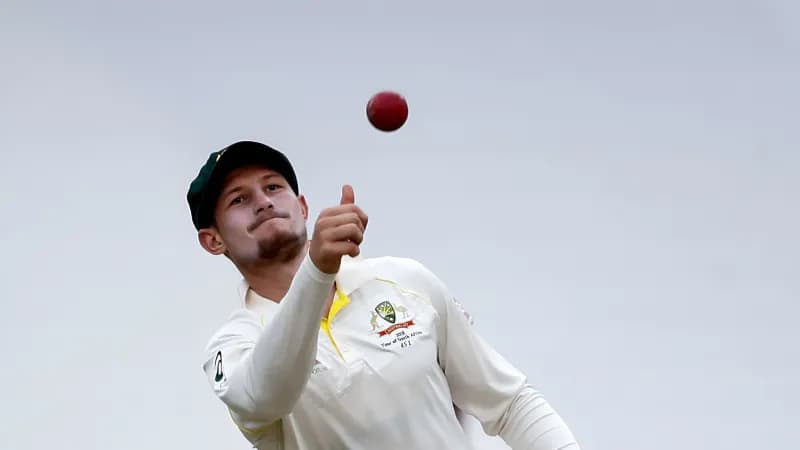
The maximum ban has grown sixfold. When Cape Town happened in March 2018, a player caught altering the ball could miss no more than one Test, and the offence sat at Level 2 of the ICC code. Today it is a Level 3 charge worth up to 12 suspension points, which means a ban of up to six Tests. Cameron Bancroft has now reopened the sandpaper affair by saying the whole team knew, so it is a good moment to measure how far the rulebook has moved since then.
The Old Code at Cape Town
The ICC’s September 2016 code listed it as a Level 2 offence under clause 2.2.9. Offenders faced a fine between half and the whole match fee, a maximum of two suspension points, or a mix of the two. Two points meant one Test, the ceiling Cape Town ran into.
The March 2018 sanctions followed that scale. Bancroft, the man holding the sandpaper, escaped a ban, Smith sat out one Test after a separate spirit-of-the-game charge, and Warner got nothing from the ICC. Cricket Australia went far harder, banning Smith and Warner for 12 months each and Bancroft for nine. Smith and Bancroft then lost leadership eligibility for another year, Warner for life.
ICC Ball Tampering Penalties
The ICC announced on 2 July 2018 that the offence would move up to Level 3, whose top end rose from eight points to 12 when the change began on 30 September. Under Article 2.14 it now carries four to 12 points, so the lightest sentence is a two-Test ban and the heaviest is six Tests, with white-ball equivalents of four and 12 games.
The Laws punish the fielding side on the day too. The October 2026 Laws hand the batting team five penalty runs and let the opposing captain pick a replacement ball with comparable wear. A second offence stops the bowler of the previous delivery from bowling again in that match. In T20Is, an identified fielding culprit means the batter picks from six balls.
Six Cases Across Two Rulebooks
Only two suspensions under the tougher code can be traced, for Nicholas Pooran in 2019 and Vivian Kingma in 2022. Both got the four-point minimum. The four 2018 cases were judged on the old scale, Dinesh Chandimal’s one-Test ban for sweet-laced saliva among them.
In 2018, the national board did the heavy lifting while the global sanction stayed small, which is why the scale went up. Since then, nobody has come near the six-Test maximum.
Year | Player | Offence | Sanction |
2018 | Steve Smith | Conduct against the spirit of the game | ICC: 1 Test, full match fee. CA: 12 months |
2018 | Cameron Bancroft | Changing the ball’s condition | ICC: 75% fee, 3 demerit points. CA: 9 months |
2018 | David Warner | Sandpaper plan | ICC: none. CA: 12 months |
2018 | Dinesh Chandimal | Sweet-laced saliva | ICC: 1 Test, full match fee |
2019 | Nicholas Pooran | Thumbnail scratching | ICC: 4 T20Is, 5 demerit points |
2022 | Vivian Kingma | Scratching with nails | ICC: 4 ODIs/T20Is, 5 demerit points |
Captains and the Saliva Rule
Captains are not automatically guilty under the current code when a teammate alters the ball, and the leadership bars after Cape Town came from Cricket Australia. T20I conditions add a twist. If nobody can be identified, the side receives a final warning, and the captain answers for any second case in that series.
Saliva went its own way. A temporary COVID-19 ban from 2020 was made permanent from 1 October 2022, with five penalty runs attached. Since 2025, umpires may also leave the ball unchanged after deliberate use.
Bancroft’s New Account Reopens Old Wounds
Usman Khawaja wrote in his autobiography that the whole squad knew about the plan. On 18 November, Bancroft backed him, saying Warner came up with the idea, the wider group discussed it, and his own account to Cricket Australia was incomplete. A recent Pat Cummins press conference was his last straw, because it did not match what he lived through.
Cummins insists the claim that the whole group knew is wrong. Mitchell Starc, Josh Hazlewood, Nathan Lyon and Cummins himself all denied knowing in advance back in 2021, and the board has ruled out fresh investigations or sanctions. The ICC ball tampering penalties written after 2018 cannot reach back to Cape Town, where one Test for Smith was the heaviest ICC ban.
Do you believe the bowlers knew nothing, or is Bancroft finally telling the full Cape Town story? Tell us in the comments.
Frequently Asked Questions (FAQs)
What is the punishment for changing the condition of a cricket ball?
A guilty player now misses between two and six Tests, or up to 12 limited-overs games. The fielding side also concedes five penalty runs, and the other captain chooses a replacement ball.
How long was Steve Smith suspended after Sandpapergate?
The ICC banned Smith for one Test and took his full match fee. Cricket Australia then added a 12-month ban from international and domestic cricket, plus a further year without any leadership role.
Can bowlers still use saliva to shine a cricket ball?
No, saliva has been banned since 1 October 2022, after a stopgap COVID-19 ban in 2020. Using it costs five penalty runs, and since 2025 umpires need not change a deliberately shined ball.
What has Cameron Bancroft now said about the Cape Town plan?
Bancroft said the whole team knew and that the idea came from Warner. He also admitted his account to Cricket Australia was incomplete and called a recent Cummins press conference his final straw.
Who was the first cricketer banned for altering the ball?
Pakistan fast bowler Waqar Younis was the first, receiving a one-match ban in July 2000. He was also fined half his match fee following an ODI against South Africa in Colombo.
Disclaimer: This blog post reflects the author’s personal insights and analysis. Readers are encouraged to consider the perspectives shared and draw their own conclusions.