

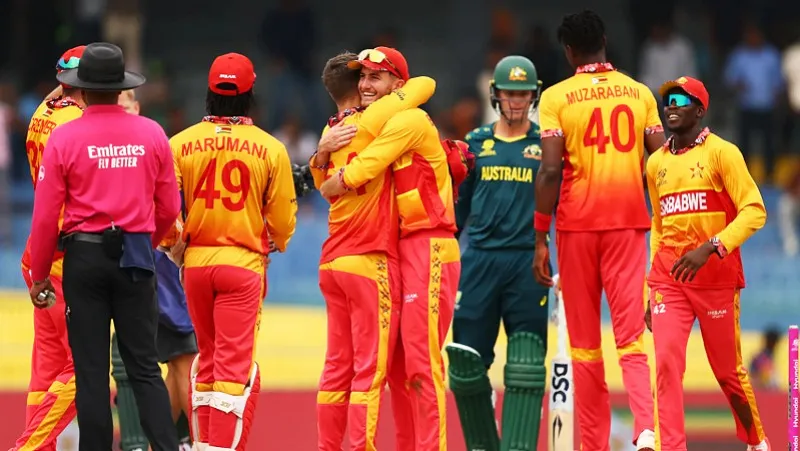

Zimbabwe’s T20 World Cup Super-Eight qualification became possible because of a disciplined bowling unit led by Blessing Muzarabani, emerging talent like Brian Bennett, and the leadership stability provided by Sikandar Raza. This achievement is not just about results but the culmination of Zimbabwe cricket’s comeback story, shaped by structural change, tactical clarity, and resilience. Their performances against stronger opponents, including the famous Zimbabwe vs Australia result, proved that this team has evolved beyond survival into genuine competition at the global level.
Transformation Created Competitive Foundation
The advancement of Zimbabwe cricket to the Super Eights was made possible by Zimbabwe’s cricket transformation policy, which has changed not only the identity of the Zimbabwean cricket team but also the strength and depth of the team before this tournament. Zimbabwean cricket previously experienced instability, limited international matches, and many inconsistencies. As a result, it was difficult for Zimbabwean cricket to build a continuity of player development for many seasons. Recently, there has been a significant increase in international competition and a clearer selection policy for players to adapt to the demands of T20 formats.
This structural reset created a squad that understood its strengths. Instead of relying on individual brilliance alone, Zimbabwe focused on collective execution. This shift helped them compete consistently in different conditions, including the slow surfaces and unpredictable weather challenges that defined their World Cup campaign.
T20WC Super Eight: Fast Bowling Led Tactical Control
Zimbabwe’s T20WC Super Eight qualification was built on bowling discipline, especially through Blessing Muzarabani’s ability to control phases of the game. His height and seam movement created problems during both the powerplay and death overs, allowing Zimbabwe to defend totals and contain stronger batting lineups.
Zimbabwe’s bowling unit succeeded by targeting hard lengths and forcing mistakes rather than chasing wickets aggressively. This tactical patience allowed Zimbabwe to stay competitive even when defending modest scores. Their bowlers adjusted well to Sri Lankan conditions, where variation and accuracy were more effective than pure pace. The psychological impact of their bowling was equally important, as opponents struggled to dominate them consistently, creating pressure that Zimbabwe capitalized on.
Australia’s Victory Changed Belief
The Zimbabwe vs Australia result became the emotional and tactical turning point in their campaign. Australia entered the match with superior rankings, experience, and expectations, but Zimbabwe executed their plans with confidence and composure.
This victory proved Zimbabwe could compete against elite teams, not just associate nations. It also changed the internal belief within the squad. Qualification scenarios became realistic rather than hopeful, and the players began performing with greater freedom and clarity. That win did not guarantee progression mathematically, but it created momentum and belief that carried Zimbabwe forward into the Super Eight stage.
Young Core Supporting Experienced Leaders
Zimbabwe’s qualification was shaped by a balance between experienced leadership and emerging talent. Sikandar Raza provided stability with both bat and ball, ensuring the team remained calm in pressure moments. His role extended beyond performance into decision-making and guiding younger players.
Brian Bennett’s emergence represented Zimbabwe’s future, showing confidence and adaptability at the highest level. His contributions reflected the benefits of Zimbabwe’s long-term rebuilding process. This balance ensured Zimbabwe was not dependent on a single player but functioned as a structured unit capable of competing across different match situations.
Zimbabwe’s qualifying is not just an advancement into the next round; it also represents the culmination of an extensive period of rehabilitation through hard work, strong determination, and belief in oneself. After years of difficult circumstances, including crises, lack of stability, and frustration, Zimbabwe’s squad has been able to build into a competitive side that can compete at a high level with teams that have much better resources than they do through consistent discipline and tactical awareness.
Key Takeaway
Zimbabwe’s T20 World Cup Super-Eight qualification became possible through disciplined bowling, leadership stability, and the successful transformation of Zimbabwe cricket after years of crisis.
FAQs
What does Zimbabwe’s Super Eight qualification mean for their cricket future?
It improves their global standing and creates more opportunities to compete regularly against top teams.
How important was the Australia match in Zimbabwe’s campaign?
It played a major role in building belief and momentum, proving Zimbabwe could defeat stronger opposition.
How did the transformation policy help Zimbabwe cricket improve?
It expanded player opportunities and helped build a more balanced and representative national team.
Who are the key young players in Zimbabwe’s current squad?
Emerging players like Brian Bennett represent the next generation and strengthen Zimbabwe’s long-term future.
Can Zimbabwe reach the semi-final stage in future tournaments?
If their current development continues, Zimbabwe has the potential to compete for deeper tournament progression.