

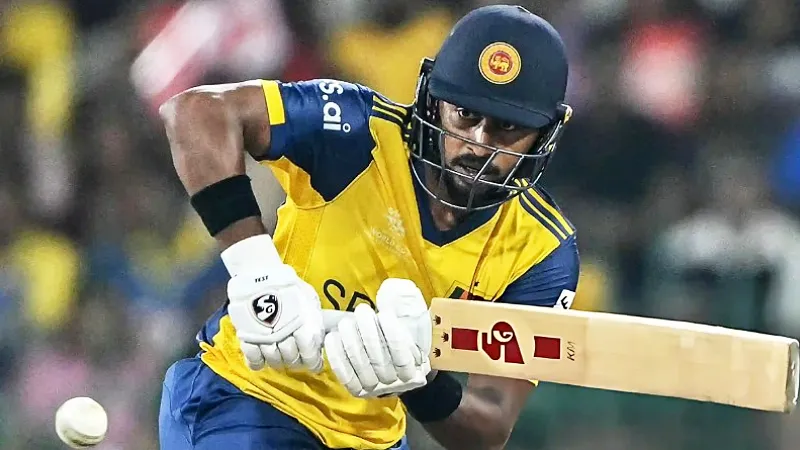

Kamindu Mendis proves he has become a dependable finisher through improved strike rate, T20 performance, strong six-hitting frequency, and smarter shot selection under pressure. His stats and records show he is no longer just an ambidextrous bowler-batsman but a key contributor in Sri Lanka’s middle-order batting. His ability to accelerate without losing stability explains why his finishing role has become increasingly important in limited-overs cricket.
From Versatility To Batting Specialist
He initially entered international cricket as a multi-skill player, but his batting is now his primary strength. His evolution reflects a shift in focus from a supporting role to a match-impact role. His calm setup at the crease helps him stay balanced, which improves timing and control. This allows him to handle both pace and spin effectively, especially in situations where quick scoring becomes essential.
His progression also reflects mental growth, as finishing requires confidence and situational awareness rather than just technical skill.
Strike Rate Shows Tactical Growth for Kamindu Mendis
In a batting evaluation for Kamindu Mendis, a major factor is increased scoring rate; 136.23 strike rate shows he can continue scoring at a decent pace, even after the power play. This is important because middle-order batsmen usually come into the game when teams are using more defensive bowling methods.
This improvement comes from better shot selection and awareness of field placement. Instead of forcing boundaries early, he builds rhythm and accelerates when bowlers adjust their plans. This approach increases efficiency and reduces dismissal risk.
Boundary Frequency Confirms Finishing Strength
His six-hitting frequency provides strong evidence of his finishing ability. Hitting a six every 17.4 balls, and even more frequently in recent matches, shows that his power is consistent rather than occasional.
This consistency forces bowlers to change their approach, which creates additional scoring options. His reach and wrist strength help him clear boundaries even on larger grounds, making him effective regardless of venue conditions. This ability is critical for Sri Lanka’s Key Finisher, as late-innings acceleration often decides match outcomes.
Middle Order Stability And Acceleration
Sri Lanka middle order batting highlights the importance of players who can balance stability with aggression. His role supports both objectives. He prevents scoring slowdowns while also increasing scoring speed when required.
His background as an ambidextrous bowler-batsman may also contribute to his batting awareness, as understanding bowling tactics improves his decision-making. This dual perspective helps him anticipate variations and react effectively. This makes him valuable not only as a scorer but also as a strategic asset.
Performance Data Supports Long-Term Role
His stats and records confirm his efficiency. Finding the boundary every 6.2 balls demonstrates his ability to influence games quickly. This shows he does not need long innings to make an impact.
Such efficiency is especially important in modern limited-overs cricket, where momentum shifts rapidly. His scoring pattern reflects control, planning, and adaptability rather than uncontrolled aggression. These qualities define a reliable Sri Lankan Key Finisher at the international level.
Historical Role Comparison And Importance
Sri Lanka’s past success in global competitions such as the ICC Men’s T20 World Cup often depended on middle-order finishers who could accelerate under pressure. Players like Thisara Perera played similar roles by combining calmness with power.
This pattern shows that strong finishing has always been central to Sri Lanka’s strategy. The current middle-order structure reflects the same requirement, making this evolution highly relevant for the team’s future balance and scoring capability.
His current trajectory suggests he can hold this responsibility consistently if his efficiency continues. His development reflects not just personal improvement but also the team’s need for dependable finishing strength. This transformation positions him as one of the most important middle-order contributors for Sri Lanka in modern limited-overs cricket.
Key Takeaway
His improved strike rate and boundary efficiency have established him as a dependable finisher in Sri Lanka’s batting lineup.
FAQs
What makes his finishing ability effective in limited-overs cricket?
His ability to accelerate without taking excessive risks makes him reliable under pressure.
How does six-hitting frequency impact batting performance?
Frequent six-hitting increases scoring speed and forces bowlers to change their strategy.
Why are middle-order finishers important for Sri Lanka?
They ensure scoring momentum continues even after early wickets.
Can an ambidextrous bowler-batsman have batting advantages?
Yes, understanding bowling angles helps improve shot selection and anticipation.
What role does strike rate play in modern cricket?
Strike rate shows how quickly a player scores, which is crucial for maintaining momentum.