

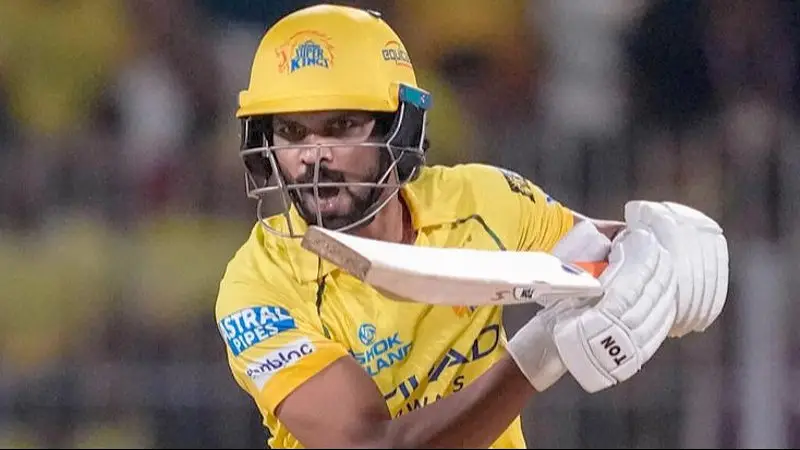

Ruturaj Gaikwad is technically excellent. He reads spin well, rotates strike intelligently, and constructs innings with genuine cricket sense. None of that is the problem. The problem is that he’s doing all of this in the powerplay, the six overs where modern T20 cricket demands boundary frequency above 140 strike rate from every batter, including anchors. His power play strike rate, hovering just above 100, isn’t a bad day. It’s a pattern. CSK starts slower than its opponents. The middle order compensates and takes risks it shouldn’t need to take. The tactical misalignment is clear, and the fix requires honesty about role suitability over reputation.
Powerplay Needs 140 Gaikwad Provides 100
The specific benchmark that separates effective powerplay batting from costly powerplay presence in this IPL season is the 140 strike rate threshold, the minimum rate at which even technically conservative openers maintain partnership value without creating the scoreboard deficit that the middle order must then overcome. Gaikwad scoring in the 100 to 110 range during the first six overs isn’t creating a deficit through poor shot selection or technical failure; it’s creating a deficit through the legitimate execution of an approach that the current IPL environment has made insufficient.
Classical Anchoring Cannot Survive Modern IPL
The T20 philosophy shift that has specifically made Gaikwad’s classical anchoring approach problematic at the top of the order isn’t gradual evolution; it’s a structural change driven by the Impact Player rule and deeper batting lineups that have removed the primary justification for conservative powerplay openers. When batting lineups extend reliably to eight or nine, the wicket-preservation logic that justified cautious powerplay batting becomes less persuasive; the team has enough wickets to absorb powerplay aggression without exposing the tail. The modern opener’s function isn’t to preserve the top order through the powerplay. It’s to exploit the power play’s field restrictions before they’re lifted.
IPL 2026 CSK Opener Balance Is Wrong
The structural problem in CSK’s opening combination is the specific imbalance created when one opener operates at a 100 powerplay strike rate alongside another who compensates through aggression. The compensating opener, whoever bats with Gaikwad, must increase their own risk profile to cover the scoring gap his conservative approach creates. Increased risk produces increased dismissal probability.
The result is a partnership structure where one opener’s conservative approach directly increases the other’s vulnerability. The ideal T20 opening pair produces combined powerplay scoring where both batters operate within their natural risk profiles rather than one batter operating conservatively and the other carrying the scoring burden alone.
Gaikwad Works Better at Number Three
The specific alternative deployment that would make Gaikwad’s technical qualities genuinely useful to CSK rather than structurally problematic is the number three position, the role where his spin handling, strike rotation, and constructive approach serve the innings plan rather than undermining it. A number three who arrives after one wicket has fallen in the powerplay or the first over of the middle phase doesn’t face the boundary-frequency pressure that defines the opening role.
He faces the building pressure, maintaining momentum from a platform, handling spin in the middle overs, bridging powerplay aggression and death-over finishing. All of these match Gaikwad’s specific strengths more precisely than the opening function currently asks him to fulfil.
- Does CSK make the tactical adjustment that moves Gaikwad to his most effective position before the group stage runs out of matches for the correction to produce the results their batting quality suggests are available, or does the status quo continue until the powerplay deficit becomes irreversible? Drop your take and follow for IPL updates.
FAQs
What is Ruturaj Gaikwad’s strike rate in IPL 2026 powerplay?
His powerplay strike rate has been just above 100, significantly lower than the current IPL average for openers.
Why is CSK’s opening combination under pressure?
Because slow starts in the power play are affecting momentum, making the opening pair a tactical concern.
Should CSK change Gaikwad’s batting position?
Moving him to No.3 could better utilize his strengths against spin and reduce early scoring pressure.
How does Gaikwad compare to modern T20 openers?
Modern openers prioritize aggressive starts, while Gaikwad follows a more traditional anchoring approach.
Can CSK’s batting order changes improve performance?
Yes, a more aggressive opener alongside a flexible middle order could significantly improve scoring patterns.