

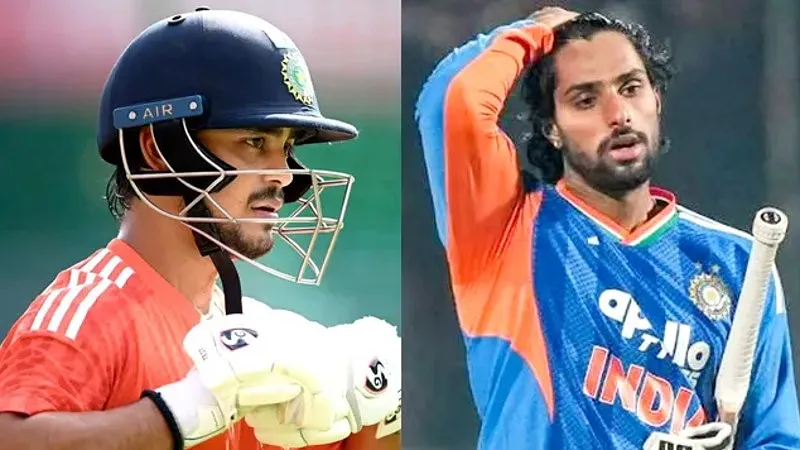

Selection headaches are usually a good problem to have unless you’re the Indian team management staring at a whiteboard running out of magnets. On January 23 in Raipur, Ishan Kishan didn’t just announce his return; he detonated it. A 32-ball 76 in a 209-run chase, wrapped up in just 15.2 overs, is not a “good knock.” It’s a message, written in sixes.
What is so captivating about this story is when he came into international play for the first time in two years. He was forgettable in his first outing, but made up for that in his second match as player of the match, and in a way that no one could have predicted and will be very difficult to ignore. Kishan has only been able to get on the field due to the injury of Tilak Varma and is expected to lose his starting role to Tilak Varma by the end of the series.
Straight Swap at the Top
The simplest solutions are often the most brutal, and this one is brutally logical. Sanju Samson’s T20I career has been a highlight reel interrupted by long buffering screens. Kishan, on the other hand, was picked for one core reason: he is a natural opener who can exploit the powerplay without handbrakes.
With Abhishek Sharma already locking down one opening slot, Kishan partnering with him creates immediate tempo. His Raipur innings wasn’t reckless slogging; it was calculated aggression, with boundary options on both sides and early intent that flattened New Zealand’s plans.
This move also solves another puzzle neatly. Tilak Varma walks back into his preferred No.3 role, maintaining batting rhythm and structural clarity. The downside? Three left-handers at the top. Against teams with quality off-spin early, that’s a tactical risk, but modern T20 cricket often rewards momentum over match-ups.
Tilak Varma Goes Down the Order
If Samson and Kishan both keep scoring, demotion becomes inevitable, and Tilak Varma may be the sacrificial chess piece. It sounds counterintuitive to move your most technically gifted batter away from No.3, but numbers soften the argument.
Tilak has already played the No.5 role before. In T20Is, his strike rate of 144.74 is respectable. In the IPL, where pressure situations are magnified, he averages over 40 at No.5. That’s not survival batting, that’s impact batting.
This arrangement also allows for India to have all of these options (Samson, Kishan, and Tilak), but this will take a toll on the team. In addition to the five specialists (batters), there will be fewer opportunities for players such as Rinku Singh and an additional all-rounder. The increased physical burden on Hardik Pandya (as a fifth bowler) is never good with a busy schedule.
Ishan Kishan as a Finisher
This is the bold, left-field option and possibly the most intriguing. Ishan Kishan as a finisher sounds radical until you remember where his IPL journey began: lower down the order for Gujarat Lions. Power-hitting isn’t position-specific; it’s skill-specific.
Kishan’s recent domestic form backs this experiment. His 39-ball 125 in the Vijay Hazare Trophy showed controlled acceleration, not blind hitting. More telling is his career T20 strike rate of 191 in death overs, a number that quietly screams suitability.
This move preserves Samson at the top and Tilak at No.3, maintaining stability while injecting firepower at the end. The risk? Wasting Kishan if early wickets don’t fall. The reward? A left-handed finisher who can flip games in ten balls, something India has chased since MS Dhoni’s prime.
Key Takeaway
Ishan Kishan’s problem isn’t with form; it’s figuring out which winning role India trusts him with most.
FAQs
- What made Ishan Kishan’s Raipur innings special?
The combination of powerplay aggression, strike rotation, and finishing speed in a 209 chase.
- Why is Tilak Varma’s return complicating selection?
Because Tilak is an automatic starter at No.3, reducing flexibility elsewhere.
- How realistic is Kishan as a finisher?
Statistically, his death-overs strike rate and domestic form support the idea.
Disclaimer: This blog post reflects the author’s personal insights and analysis. Readers are encouraged to consider the perspectives shared and draw their own conclusions.
Step into the world of cricket with JeetBuzz News—where expert opinions, trending Blogs, and behind-the-scenes insights meet all your favorite topics. Stay informed, stay entertained, and never miss the stories shaping the cricketing world—only on JeetBuzz News!