

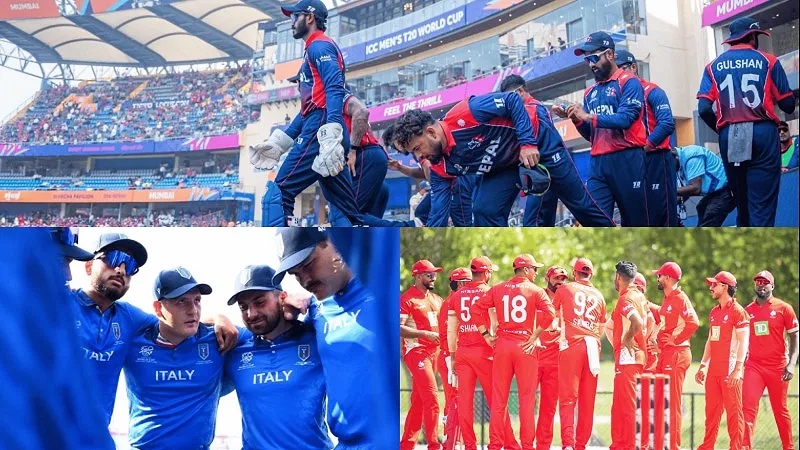

The reality behind the Associate teams’ T20WC gap-closing is simple: exposure, experience, and belief have transformed smaller nations into genuine competitors. When Shubham Ranjane faced a crisis with India at 63 for 4, or when Max O’Dowd stood firm as Pakistan were 125 for 7, it reflected pressure parity, not mismatch. Similarly, moments like Lokesh Bam powering Nepal are 171 for 5 show that Associate teams are no longer participants. They are contenders shaping match outcomes.
Franchise Exposure Changed Player Quality
The biggest tactical driver behind the Associate teams’ T20WC is franchise cricket. Players like Dipendra Singh Airee have benefited from high-pressure leagues where game awareness improves dramatically. Franchise environments simulate international pressure, forcing players to develop finishing skills, death bowling accuracy, and fielding standards.
These improvements are visible in chase scenarios. Associate batters now target specific bowlers, preserve wickets, and accelerate late, mirroring top-team strategies. This tactical maturity explains why totals like Nepal’s 171 for 5 or Italy’s 173 for 7 are no longer defensive scores but competitive ones.
Conditions also play a role. Flat surfaces in India and Sri Lanka reward fearless batting, but Associate teams are now matching strike rotation efficiency, not just boundary hitting.
Pressure Situations Show True Parity
The clearest evidence of the Associate teams’ T20WC appears during match-defining pressure moments. When Pakistan is 125 for 7, Associate bowlers are not just containing runs but attacking with wicket-taking intent.
This shift comes from improved death bowling tactics. Associate seamers use slower balls, wide yorkers, and hard lengths instead of predictable lines. Batters are also targeting weaker matchups rather than surviving spells.
The fact that Italy reached 173 for 7 against stronger opposition reflects strategic batting depth. Teams now bat deeper, ensuring sustained scoring. These are structural improvements, not emotional upsets.
Scotland pushed England: T20 World Cup
When the Scotland national cricket team pushed the England cricket team, it exposed how preparation gaps have narrowed. Associate teams now prepare with analysts, video review, and specialist coaching. This preparation allows smarter tactical decisions, such as targeting fifth bowlers and rotating strike against elite pacers.
Players like Marcus Campopiano represent another structural advantage. Many Associate players come through Full Member domestic systems, meaning their technical base is already elite. This hybrid development model strengthens Associate squads significantly.
Match Situations Prove Competitive Growth
Scorelines like India 63 for 4 and Pakistan are 125 for 7 highlight how Associate teams are consistently creating winning positions. These situations matter more than final results. Cricket outcomes often depend on small margins, but reaching these positions repeatedly proves competitive equality.
Associate teams are now controlling phases of matches rather than reacting. Their bowling plans, field placement discipline, and chase pacing show strategic maturity. The Associate teams’ T20 World Cup gap-closing is visible in phases won, not just matches won.
Historical Comparison Shows Real Progress
In earlier tournaments like the 2009 and 2014 T20WCs, Associate teams struggled to create sustained pressure. Matches were often decided early due to skill gaps and a lack of experience.
The modern era is different. Associate players now share dressing rooms with elite professionals in leagues worldwide. This accelerates learning dramatically. Exposure to high-quality coaching, tactical analytics, and global competition has compressed the development timeline.
This mirrors how teams like Ireland rose to Full Member status after years of competitive performances. The same trajectory is now visible across multiple Associate nations simultaneously.
Key Takeaway
Associate teams are no longer chasing the game; they are shaping it through tactical and structural evolution.
FAQs
What is causing Associate teams to improve in the T20 World Cup cricket?
Franchise league exposure, better coaching, and regular high-pressure match experience are accelerating their development.
Why did Scotland push England in recent tournaments?
Improved preparation, tactical planning, and player experience from global leagues reduced the performance gap.
How important is franchise cricket for Associate players like Dipendra Singh Airee?
It helps them learn pressure handling, finishing skills, and advanced tactical awareness.
Can Associate teams realistically beat top teams regularly now?
Yes, their consistent ability to create winning situations shows regular victories are becoming more likely.
Is Italy’s 173 for 7 a competitive score in modern T20 cricket?
Yes, totals above 170 are highly competitive, especially when backed by disciplined bowling plans.